
The short answer
Sewage in a shower means the blockage is downstream of every fixture — usually the main lateral, not the shower itself. Stop using all water immediately, keep everyone out of the room, and get the lateral cleared. It is Category 3 water, so cleanup needs containment and documented sanitizing.
This one alarms people more than almost anything else, and rightly. It is also widely misdiagnosed, because the fixture where it appears is not the fixture with the problem.
Why it comes up in the shower specifically
Everything in your house drains into one line — the sewer lateral — which carries it to the public main. When that lateral blocks, the waste water behind the blockage has to go somewhere, and it goes to the lowest opening in the system.
A shower or bath drain sits at floor level. A toilet bowl sits higher. A sink sits higher still. So the shower, the bath or a floor drain is almost always where a lateral backup surfaces first.
That is why plunging the shower does nothing. There is no blockage in the shower.
The signs that tell you it is the lateral
- Multiple fixtures draining slowly at the same time. One slow drain is a trap. Several together is the lateral.
- A toilet that gurgles when the washing machine or shower drains. Air being displaced past a blockage.
- Water rising in one fixture when you use another. Flushing a toilet and seeing the shower fill is definitive.
- Sewage smell at the exterior cleanout, particularly after rain.
- A soggy or unusually green patch of lawn over the line of the lateral.
What causes it here
On Lafayette and Lamorinda properties, four causes account for nearly everything.
- Tree roots. The dominant cause on wooded lots. Fine feeder roots from mature oaks and bays follow the moisture weeping from joints in older clay or cast-iron laterals, enter, and thicken into a mat that catches solids. See tree roots in your sewer line.
- Pipe failure or a belly. Clay and cast iron installed in the 1950s to 1970s is past design life. Ground settlement creates a low spot where solids collect.
- Grease and wipes. Cooking grease congeals in a cold lateral. "Flushable" wipes do not break down. Either finishes off a partially restricted line.
- Storm surcharge. During heavy rain, groundwater infiltration into old laterals and mains raises flow system-wide. A line that copes in September surcharges in February, which is why backups cluster during storms.
The health risk is real
This is Category 3 water. It carries E. coli, salmonella, hepatitis A, giardia and rotavirus among others, and exposure happens through skin contact, ingestion from contaminated hands, and inhalation of aerosols — which is the route people forget.
What to do right now
- Stop using every fixture in the house. Every flush and every appliance cycle adds volume to a system that cannot take it.
- Get children and pets out and close the door on the affected room.
- Turn off the HVAC if a return or supply register is in that space — it will distribute contaminated aerosols building-wide.
- Do not attempt to clean it. Household disinfectant on porous material sterilizes the surface and leaves the contamination inside.
- Photograph it from the doorway for your claim, then leave it alone.
- Call a plumber for the blockage and a restoration contractor for the contamination — +1 (201) 277-9344.
What proper cleanup looks like
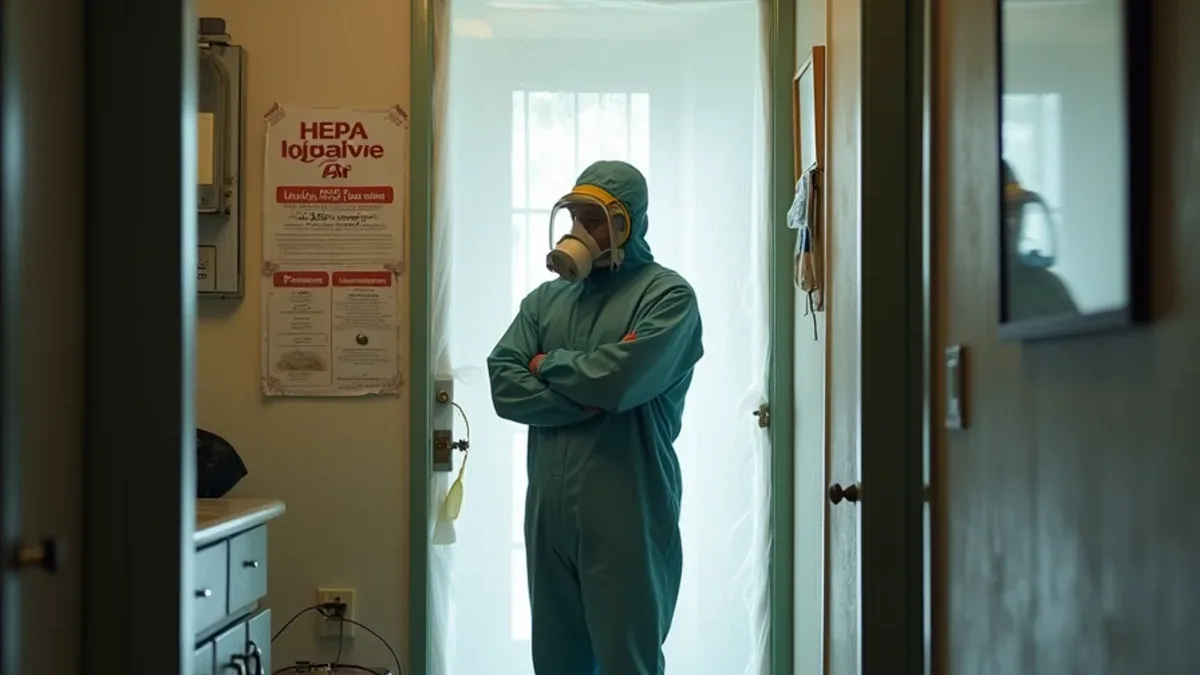
Containment before anything else — sealed poly barriers with negative air pressure and HEPA-filtered air scrubbers exhausted outside, so contamination cannot migrate. Then full PPE, extraction to regulated disposal, removal of every affected porous material, detergent cleaning followed by EPA-registered antimicrobial at full dwell time, odor source removal, monitored drying and post-remediation verification.
See sewage cleanup and backup removal for the full protocol.
Stopping the next one
A lateral backup is almost never a one-off. Rootering clears the mat and the line drains again, but every entry point remains and the roots regrow — you have bought eighteen months.
A camera inspection costs a small fraction of one Category 3 cleanup and tells you the actual condition. Lining or replacement ends the sequence. A backwater valve, which closes automatically if flow reverses, is the single most effective protection against a main-line surcharge.
This is the defining recurring loss on the wooded lots through Happy Valley and across Lamorinda.
Frequently asked
Why is sewage coming up through my shower drain?
Because your sewer lateral is blocked and the waste water behind the blockage is surfacing at the lowest opening in the system. A shower or bath drain sits at floor level, below the toilet bowl and well below the sinks, so it is almost always where a lateral backup appears first. Plunging the shower does nothing — there is no blockage in the shower.
Can I clean up sewage in my bathroom myself?
We would strongly advise against it. Sewage carries E. coli, hepatitis A, giardia and other pathogens, and exposure happens through skin contact and inhaled aerosols as much as anything obvious. Household disinfectant on porous material only sterilizes the surface. Without containment and negative air pressure you also spread aerosols into the rest of the house while you work.
What causes a sewer lateral to block?
On wooded Lafayette and Lamorinda lots it is overwhelmingly tree roots — fine feeder roots from mature oaks and bays enter through joints in older clay or cast-iron pipe and thicken into a mat that catches solids. The other causes are pipe failure or a belly from ground settlement, grease and non-flushable wipes, and storm surcharge where groundwater infiltration raises system-wide flow.
How do I stop it happening again?
Get the lateral camera-inspected — it costs a small fraction of one Category 3 cleanup and tells you the actual condition. If roots have compromised the pipe, lining or replacement ends the sequence, whereas rootering just resets the clock for eighteen months. A backwater valve, which closes automatically if flow reverses, is the most effective single protection against a main-line surcharge during storms.