

Extraction is the cheapest hour of the entire job. Every gallon we pull out with a vacuum is a gallon nobody has to evaporate later with three days of dehumidifier runtime — which is why the difference between calling at hour one and calling at hour six shows up directly on your invoice.
We run truck-mounted extraction, portable units for upstairs and tight access, and submersible pumps for anything standing deep. Call +1 (201) 277-9344 and we will be rolling.
Signs you need water extraction & removal
If you recognize two or more of these, the problem is already past the point where waiting is cheaper.
Visible standing water
Anything you can see pooling needs vacuum extraction, not mopping.
Squelching carpet
If it makes a sound underfoot, the pad is fully saturated and holding roughly a gallon per square foot.
Water spreading room to room
Water follows the floor slope. It is usually already two rooms further than the wet edge you can see.
Water under an appliance or cabinet toe-kick
The worst place to leave it — dark, enclosed, and directly against particleboard.
A flooded garage slab
Water heater and washer failures. Check whether it has crossed under the shared wall into the house.
Standing water in a crawl space
Needs pumping before anything else can be assessed. Often unnoticed for weeks.
Why a shop vac is not extraction
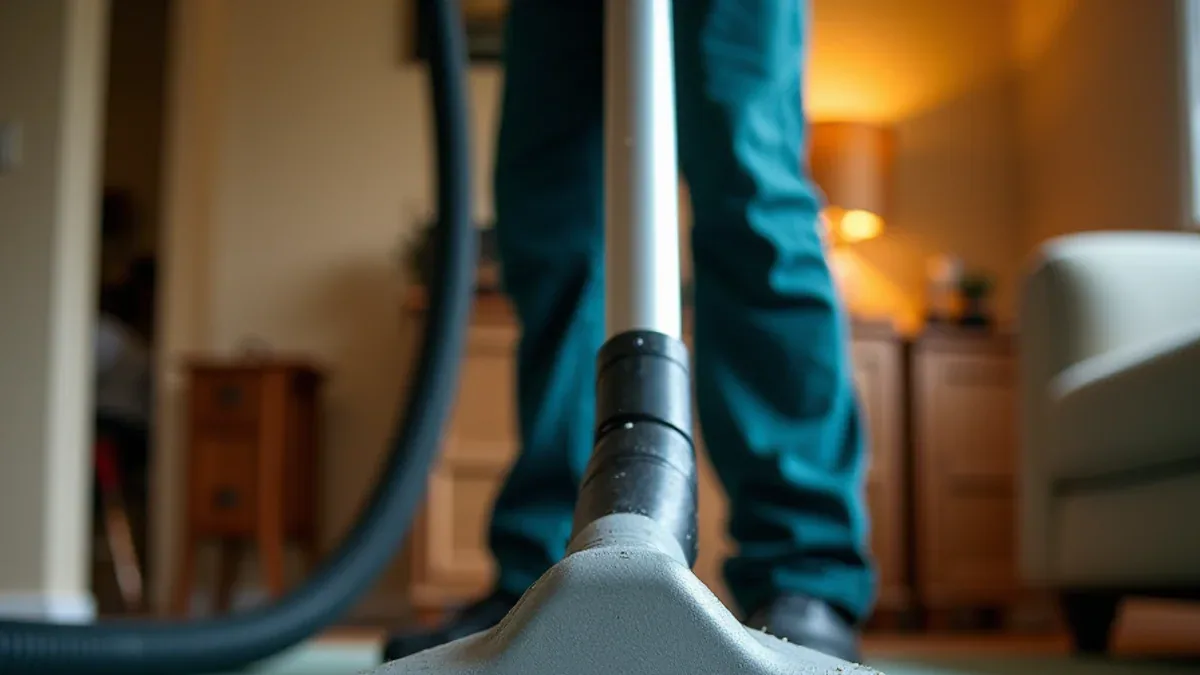
A wet/dry vac lifts the water you can see. It does almost nothing about the water that has already been absorbed. Carpet pad is essentially a sponge — a standard 8-pound rebond pad holds several times its own weight in water, and it holds it against gravity. Underneath that, the subfloor and the sill plate are drinking.
Professional extraction solves that with two things a rental unit does not have: vacuum lift measured in inches of mercury, and weight. A weighted extraction tool compresses the carpet and pad while it vacuums, squeezing water out of the fiber rather than skimming the top. Truck-mounted units add sustained airflow that a portable simply cannot match over a large area.
- Water held per sq ft of saturated carpet + pad
- ~1 galWater held per sq ft of saturated carpet + pad
- Window before mold begins on wet materials
- 24–48 hrWindow before mold begins on wet materials
- Drying time when extraction is done properly first
- 3× fasterDrying time when extraction is done properly first
- Our dispatch target across Lafayette
- 60 minOur dispatch target across Lafayette
The equipment we bring, and when
Truck-mounted extraction
Our first choice whenever the truck can get within hose reach. It gives the highest sustained lift, dumps to an onboard tank so nobody is emptying buckets, and it does not draw on your electrical service. On the tighter hillside driveways off Reliez Valley Road and upper Happy Valley we run long hose lays to reach the house.
Portable extractors
For second floors, interior stairs, condos in Rossmoor, and anywhere a hose run would be longer than the vacuum can hold. Slower per square foot, but they go where the truck cannot.
Submersible pumps
Anything standing more than an inch or two — a flooded garage after a water heater failure, a crawl space that has taken hillside runoff, a commercial basement. We pump the bulk volume out first, then extract the residual. See flooded basement and crawl space cleanup.
Weighted and stationary tools
A ride-on or stand-on extractor on a large open floor plan does in one pass what a hand wand does in four. On glue-down and dense commercial carpet, weight is the difference between damp and dry.
What extraction looks like on your floor
Source control first
We confirm the water has stopped. If a supply line is still open we shut it, and if it needs a plumber we coordinate that call while we work. Extracting against an active source is throwing money at a running tap.
Safety and power
Power isolated to affected circuits where water is near outlets or appliances, and standing water checked for contamination before anyone walks it.
Contents lifted and protected
Furniture legs onto blocks or foil tabs, rugs rolled out of the way, anything porous and salvageable moved to a dry room and inventoried.
Bulk water out
Pumps for depth, then truck-mount or portable across the whole affected footprint. We work in overlapping passes and re-check with a moisture meter rather than by eye.
Pad and material decisions
Carpet pad in a Category 1 loss is often removed rather than dried — it is cheap to replace and slow to dry. Carpet itself we usually save by floating it and drying underneath. Anything Category 3 comes out.
Straight into drying
Air movers and dehumidifiers go in the same visit. Extraction and structural drying are one continuous job, not two appointments.
Where we extract most often in Lafayette
Kitchens and laundry rooms lead by a wide margin — supply lines, dishwasher hoses and washing machine hoses. Attached garages come next, because that is where most of this town keeps the water heater. After a winter storm the mix shifts to crawl spaces and lower-level rooms on sloped lots in Burton Valley, Springhill and the Canyon Road corridor, where surface runoff finds a way in.
For commercial spaces along Mt Diablo Boulevard we schedule extraction around trading hours wherever the loss allows, and we set containment so a retail floor can keep operating on one side while we work the other.
You do not need to know what to ask for
You do not have to know whether this is water extraction & removal, extraction, mitigation or a full restoration — those are stages of one job and sorting out which you need is our work, not yours.
A local person answers
Not a call center selling your emergency on to whoever bids for it.
First question
Has the water stopped? Everything about water extraction & removal changes depending on whether it is still arriving.
Then we move
60-minute dispatch, and we talk you through the shutoff while the crew is loading.
Free, no-obligation inspection with moisture readings and a written assessment. We bill your insurer directly.
Our water extraction & removal process
Six steps, documented at every stage, with the daily readings that prove it.
Stop the source
Shut off or coordinate the repair before we extract a single gallon.
Make it safe
Isolate power, assess contamination, protect the walking path.
Pump the depth
Submersibles for anything standing more than an inch or two.
Extract the saturation
Truck-mount or portable, weighted tools, overlapping passes, meter-verified.
Handle the pad
Remove or float and dry, based on category and material.
Set drying the same day
Air movers and dehumidifiers go in before we leave.
What drives the price
We are not going to quote a number over the phone — nobody can scope a water loss without walking the property. These are the factors that decide it.
- Volume and depth of water
- Pumping thousands of gallons out of a crawl space is a different job than extracting one saturated bedroom.
- Water category
- Category 3 extraction requires PPE, containment, and disposal of the extracted water and all porous materials.
- Floor covering
- Loose-lay carpet extracts fastest. Glue-down, engineered wood over concrete, and tile with a saturated mortar bed are slower and often need specialty drying.
- Hose distance and access
- Long hillside driveways, second-floor work and tight crawl spaces add labor hours.
- Contents handling
- Moving, blocking and inventorying furniture and stored items is real time, especially in a full garage.
- After-hours dispatch
- We answer 24/7 and we do come out at 3 a.m., which carries an emergency rate — and almost always saves more than it costs.
Why choose Water Lafayette for water extraction & removal
Not the generic badges every restoration site carries — the things that actually change the outcome on this particular job.
Weighted extraction, not just suction
A weighted tool compresses the carpet and pad while it vacuums, squeezing water out of the fiber. A rental machine skims the surface and leaves the pad holding roughly a gallon per square foot.
Truck-mount, portables and submersibles on the same truck
Hillside driveways in Reliez Valley and upper Happy Valley defeat a hose lay. We carry the portables and the pumps so the crew is not deciding what to do after arriving.
Extraction is the cheapest hour of the job
Every gallon vacuumed out is a gallon nobody evaporates over three days of dehumidifier runtime. Thorough extraction routinely cuts the drying schedule by a third, and that shows on the invoice.
We meter-verify instead of eyeballing
Passes are checked with a moisture meter, not judged by how the carpet looks. IICRC S500 sets a measurable standard and that is what we work to.
Pad decisions made on category, not habit
Clean water: pad out, carpet floated and saved. Category 3: both go. We explain which one you have and why, before anything is cut.
Licensed and insured California contractor · IICRC-certified to the S500 water damage and S520 mold remediation standards · 60-minute dispatch across Lafayette and Lamorinda · Based at 3450 Golden Gate Way, Lafayette, CA 94549.
Water Extraction & Removal FAQs
How long does water extraction take?
For a typical single-room residential loss caught early, extraction itself is usually one to three hours on site. A flooded crawl space or a multi-room commercial loss can take most of a day, and a deep crawl space may need pumps left running. Extraction is always the same visit as the initial assessment — we do not book it as a separate appointment.
Can I just rent a carpet cleaner and do it myself?
A rental machine will lift some surface water, but it lacks the vacuum lift and the weight to pull water out of the carpet pad, and it does nothing for the subfloor or the wall cavity. The risk is not the water you get — it is being convinced the floor is dry when the assembly underneath still holds several gallons, which is exactly how a small loss turns into a mold remediation four weeks later.
Will you have to remove my carpet?
Usually not the carpet itself. In a clean-water loss we typically remove and replace the pad — it is inexpensive and very slow to dry — then float the carpet and dry underneath it before re-laying. Carpet exposed to Category 3 sewage or floodwater has to be removed and disposed of; that is a health decision, not a cost one.
Do you extract water from crawl spaces in hillside Lafayette homes?
Yes, and it is one of the most common calls we take after a winter storm. We pump the standing water out with submersibles, extract or remove saturated insulation and any vapor barrier holding water, then dry the crawl space and the underside of the subfloor with dedicated equipment. We will also point out the drainage or downspout issue that let the water in, because that is what stops it happening again next storm.
What do you do with the water you extract?
Clean-water extraction goes to our truck-mounted holding tank and is disposed of through an approved sanitary connection. Category 3 water — sewage or floodwater — is handled as contaminated waste with the appropriate containment and disposal, along with the porous materials it touched.
Related reading
Why Shop-Vaccing a Flooded Carpet Isn't Enough (What Professional Extraction Pulls Out)
A saturated carpet and pad assembly holds roughly a gallon of water per square foot — held against gravity, inside the fiber. A rental machine skims the top of that.
ReadWashing Machine Supply Line Burst: 5 Steps to Limit the Damage
Washer hoses sit under full mains pressure twenty-four hours a day behind an appliance nobody moves. When one lets go while you are at work, it runs for eight hours.
Read