

24/7 Emergency Response
Water Damage Restoration in Lafayette, CA
- 60-minute dispatch across Lafayette and Lamorinda
- IICRC-certified crews
- We bill your insurer directly
60 min
Dispatch target across Lafayette & Lamorinda
24/7
A real person answers, every hour of the year
IICRC
Certified in water restoration & structural drying
Direct
We bill your insurer — no upfront payment
Locally owned and operated from 3450 Golden Gate Way, Lafayette · Licensed & insured
The short answer
Water damage restoration is extraction, monitored structural drying, then repair of what the water damaged — in that order. Water Lafayette runs all three from 3450 Golden Gate Way, Lafayette, CA 94549, dispatching within 60 minutes across Lafayette and Lamorinda, 24 hours a day. IICRC S500 methods, documented moisture readings, billed direct to your insurer.
Right now
What to do in the first 60 minutes
Shut the water off
Appliance shutoff first. Otherwise the main — usually on the exterior wall nearest the street, or the meter valve at the property line.
Cut power to the affected area
At the breaker panel, if water is near outlets, cords or appliances. Never stand in water to reach a panel.
Photograph everything before you move it
Wide shots of each room, then close on the source and the water line. This is the single most valuable thing you can do for your claim.
Lift and block furniture, move valuables
Legs onto blocks or foil, rugs rolled out, electronics and documents to a dry room.
Call your insurer within 24 hours
You do not need costs or scope — you need the claim opened and the date on record.
Call us for extraction and drying
We will talk you through anything on this list you have not managed while a crew is on the way.
Never use a household vacuum on standing water
It is an electrocution risk. And do not wait to see if it dries on its own — under EPA and IICRC guidance, mold can begin growing within 24 to 48 hours.
Get a free inspection
Moisture readings, thermal imaging and a written assessment. No obligation.
Work out what you are dealing with
What type of water damage do you have?
Answer all three and we will tell you which category this points to, and what to do next.
This is guidance, not a diagnosis. Nobody can classify a water loss without walking the property and taking moisture readings — including us. If you want it confirmed, the inspection is free.
Signs you need water damage restoration
What you are noticing, and what it usually turns out to be
| What you notice | What it usually is | Where to start |
|---|---|---|
| A musty smell you cannot find the source of | Microbial growth on something wet inside a wall, under a floor or in the crawl space. Air moves upward, so the smell usually surfaces a floor above the water. | mold remediation |
| A water bill that stepped up with no change in usage | A supply line losing water continuously — under the slab, inside a wall, or out on a buried irrigation lateral. Compare against the same month last year, not last month. | leak detection |
| A warm patch on a slab floor | A hot-water line failing under the concrete. The warmth is the plume around the break, and it is often the only symptom before the flooring lifts. | slab leak water damage |
| Paint bubbling, or a stain that comes and goes | Water arriving intermittently — a pinhole that only weeps under pressure, or rain finding a path through the envelope. Intermittent does not mean minor. | burst pipe cleanup |
| A ceiling stain that has grown since you first noticed it | Active, not historic. Water is tracking along a joist and pooling above the drywall, and wet gypsum fails without much warning once it is loaded. | ceiling water damage repair |
| Floors that cup, crown or feel spongy underfoot | Moisture in the subfloor. Solid hardwood cups from below long before the surface looks wrong, which is why a moisture meter beats an opinion here. | structural drying and dehumidification |
| Several drains slow at once, or a toilet gurgles | The blockage is downstream of every fixture — the main lateral, usually roots in an old clay line on a wooded lot. The next backup is the one that comes up inside. | sewage cleanup |
| Damp crawl space, or condensation on the underside of the subfloor | Standing groundwater or a drainage failure below the house. It is the quietest expensive loss we handle, because nobody goes down there to look. | flooded basement and crawl space cleanup |
When it stops being a wait-and-see
Call the moment any of three things is true: the smell is present in more than one room, a surface is still damp more than 48 hours after the water stopped, or anyone in the house has a respiratory condition. Under EPA and IICRC guidance, mold can begin growing on wet material within 24 to 48 hours — which is the window that decides whether this is a drying job or a mold remediation job. The inspection is free either way, and we will tell you plainly when the answer is that you do not need us.
What we do
Water damage services across Lafayette
People call this different things — water damage cleanup, water damage restoration, water removal, water extraction. They are not competing services, they are stages of one job: get the water out, dry the structure back to a measured standard, then repair what the water damaged. Your insurer will call the first two stages water mitigation and price them separately from the rebuild, which is worth knowing before you read an estimate. If you are not sure which one you need, call and describe what you can see. That is our job to work out, not yours.
24/7 Emergency Water Removal
A real person answers at any hour and a crew rolls. 60-minute dispatch target across Lafayette and Lamorinda, every day of the year.
Learn moreWater Extraction & Removal
Truck-mounted and submersible extraction that pulls standing water out fast — before it reaches the subfloor and the wall cavities.
Learn moreStructural Drying & Dehumidification
Monitored drying with LGR dehumidifiers, air movers and specialty cavity systems — with a daily reading log that proves the building is actually dry.
Learn moreMold Remediation
Containment, HEPA filtration, source removal and verification — plus fixing the moisture problem that grew it, so it does not come back.
Learn moreSewage Cleanup & Backup Removal
Category 3 backups handled to standard: containment, full PPE, contaminated material removal, disinfection and complete odor elimination.
Learn moreFlood Cleanup
Storm runoff, creek overflow and yard flooding cleaned up properly — pumped, sanitized, dried and documented as the Category 3 loss it usually is.
Learn moreBurst Pipe Cleanup
Shutoff help on the phone, immediate extraction, wall and cavity drying, and plumber coordination so the floor is opened once.
Learn moreLeak Detection & Repair Coordination
Non-invasive location of slab, wall and yard leaks using acoustic, thermal and tracer-gas methods — before anyone opens a floor.
Learn moreStorm Damage Cleanup
Emergency tarping and board-up, water extraction, debris removal and full drying after atmospheric rivers and wind events.
Learn more
What we are actually specialists in
Hillside homes, crawl spaces and the water nobody finds for a month
A large share of Lafayette sits on slope — Happy Valley, Burton Valley, Springhill, Acalanes Ridge, the Reliez Valley pocket. When an atmospheric river drops two inches in six hours, saturated clay stops absorbing and the surplus sheets downhill. If a downspout discharges a foot from the foundation, or a French drain silted up two winters ago, that water ends up under the house.
Crawl space flooding is the quietest expensive loss we deal with, because nobody goes down there. Air moves upward out of a crawl space into the living area, so the first symptom upstairs is usually a musty smell in a hallway closet that nobody can place — weeks after the storm that caused it.
The other half is the housing stock itself. Mid-century copper at pinhole age. Water heaters in attached garages, where the water crosses under the shared wall plate into the hallway. Coast live oak roots in clay sewer laterals on the wooded lots. We work all of those every week, which is why our area pages are written on real local risk rather than a find-and-replace of the city name.
Why homeowners call us
Six things a national franchise cannot say
A local person answers, at any hour
Not a national dispatch service that sells your call to whoever bids for it. Someone here picks up, gives you immediate safety instructions, and sends a crew. Every night of the year.
A real address on Golden Gate Way
You can drive past 3450 Golden Gate Way. Direct Highway 24 access is the whole basis of our 60-minute dispatch commitment — a company fighting surface streets to reach a freeway cannot make that promise honestly.
We measure instead of guessing
Moisture meters, thermal imaging and a written dry standard set against unaffected material in your own building. You get a daily reading log, and the job finishes when the numbers say so — not when the schedule does.
We know what fails in these houses
Mid-century copper at pinhole age. Garage water heaters. Oak roots in clay laterals. Hillside runoff into crawl spaces. We are not running a national template — we work these specific failures every week.
Your insurer is billed directly
You pay your deductible, not the whole job up front. The adjuster gets a moisture map, daily logs, the full photo set and a line-item scope in the format they already work in — and we defend it with readings.
We tell you the honest answer
Including when the honest answer is that someone closer will reach you faster, that your roof was at the end of its life, or that the material can be saved rather than replaced. Reputation here is a small-town asset.
How the job runs
From your phone call to the final walkthrough
You call, a person answers
Immediate safety instructions on the phone — where the shutoff usually is, what to do about power, what not to touch — while a crew is dispatched.
We arrive and secure the site
Source stopped, power isolated where needed, contamination assessed, and everything photographed before anything is moved.
We extract, fast
Pumps for depth, truck-mount or portable extraction across the whole saturated footprint. Every gallon vacuumed out is a gallon nobody has to evaporate later.
Equipment goes in the same visit
Air movers and dehumidifiers sized to the load, running before we leave. Never "we will come back tomorrow to set up" — overnight is a third of the mold window.
We monitor daily and log it
Same marked points, same time each day, recorded. If a reading stalls, we change the approach on day two rather than finding out on day six.
We rebuild and walk you through it
Repairs completed once readings confirm the dry standard, then a documented handover — what was dried, what was replaced, and what to watch for.
The kit that makes it measurable
Drying is applied physics, not a matter of pointing fans at a wet floor. This is what comes off the truck, and why each piece is on it.
- Truck-mounted extraction & submersible pumps
- Vacuum lift and weight, so water comes out of the carpet pad instead of off the surface.
- Commercial air movers & LGR dehumidifiers
- Sized to the cubic footage and the load, not to whatever happened to be on the truck.
- Moisture meters & thermal imaging
- Finds water inside walls, under flooring and in crawl spaces before anything is opened.
- Hygrometers for drying verification
- Ambient readings inside and outside the drying chamber, logged every day.
- HEPA air scrubbers
- Negative air and particulate control — not optional on anything Category 2 or 3.
- Antimicrobial & anti-mold treatments
- Applied after detergent cleaning, at full dwell time. Disinfectant does not work through soil.
Categories, classes and what it costs
Nobody else in this market publishes a price. We do.
| Water category | Common sources | Health risk | Mitigation / sq ft |
|---|---|---|---|
| Category 1 — Clean | Broken supply lines, sink and tub overflows, rainwater through an opening | Low. Safe to handle with basic precautions. | $3.50 – $4.50 |
| Category 2 — Gray | Washing machine and dishwasher discharge, urine-only toilet overflow, sump pump failure | Moderate. May contain bacteria, detergents and chemicals. | Between Cat 1 and Cat 3 — quoted after assessment |
| Category 3 — Black | Sewage backups, toilet overflow with solids, creek or storm floodwater | High. Pathogens and toxins. Requires PPE, containment and regulated disposal. | $7.00 – $7.50 |
Damage class matters as much as category
Category is about contamination. Class is about how much water the building absorbed and how hard it will be to get back out — Class 1 is a bathroom overflow caught in twenty minutes, Class 4 is deep saturation in hardwood, plaster or concrete that needs specialty systems and the longest schedule.
In 2026, California water damage jobs commonly run roughly $1,200 to $5,000. A severe Class 4 loss with structural saturation and a full rebuild can reach $20,000 to $100,000 or more. The single biggest variable is not the size of the leak — it is how long the water sat, which is the one thing you control.
Full breakdown in our 2026 Lafayette price guide, and how we run the job is further up this page.
Your claim, handled
We bill your insurer directly — and build the file that gets it paid
Call your insurer within 24 hours
You do not need costs or a scope. You need the claim opened and the date on record — a delay of days is one of the easiest things for a carrier to push back on.
Document before anyone cleans up
Wide shots of every room, then close on the source itself. A photograph of the split pipe is what establishes a sudden accidental failure rather than a slow leak.
We build the evidence file
Moisture map, daily drying logs, the full photo set, and a line-item scope written in the estimating format adjusters already work in.
We bill the carrier directly
You pay your deductible. You do not front a five-figure job and wait months to be reimbursed.
We defend the scope with readings
When a line item gets questioned, the answer is a number from a marked reading point — not an argument.
What a standard policy usually will not cover
Gradual leaks that have been running for months, deferred maintenance, and — importantly in this county — surface flooding from storm runoff or a creek. That is flood insurance territory, which is a separate policy. Sewer backup usually needs its own endorsement too.
If storm water came in from outside, tell us early so we document the entry path correctly from the start — that is what stops a covered portion being denied alongside an excluded one.
Keep hold of these for your claim
- Photos and video of every affected room, taken before any cleanup
- A close photograph of the actual failure — the split pipe, the corroded tank base, the burst hose
- A list of damaged items with approximate age and value
- The date and time the damage occurred, and when you discovered it
- The water source and, once we have assessed it, the category
- Receipts for emergency purchases, and for any hotel nights you have to take
- A written log of every call: date, who you spoke to, what was agreed
Our full walkthrough: how to document water damage for an insurance claim.
Before you hire anyone
How to choose a restoration contractor without getting burned
Verify the CSLB license yourself
Look them up on the California Contractors State License Board lookup, and confirm they carry liability insurance. An unlicensed crew that damages your home leaves you holding it.
Ask who is actually answering the phone
A national lead-generation number sells your call to whoever is available — sometimes to several contractors at once. Ask where the crew dispatches from and how long it takes to reach your street.
Ask for the water category and damage class
It should take one walkthrough to tell you. A contractor who cannot answer is guessing at everything downstream of it, including the price.
Ask for a written drying plan with readings
Not a verbal estimate and a signature on a blank work authorization. You want marked reading points and a dry standard set against unaffected material in your own building.
Be skeptical of a free estimate with no inspection
Nobody can scope a water loss from a phone call. A firm number before anyone has walked the property is either a lowball or padding.
Check there is a real address
A toll-free 800 or 877 number with no premises anywhere on the site is the clearest tell there is. Ours is 3450 Golden Gate Way — you can drive past it.
A large share of the results you will see searching for emergency water damage are lead-generation companies rather than restoration contractors. They answer, take your details, and sell the lead. Reading how we run a job and why we have not published a star rating yet will tell you more about us than any badge on a homepage.
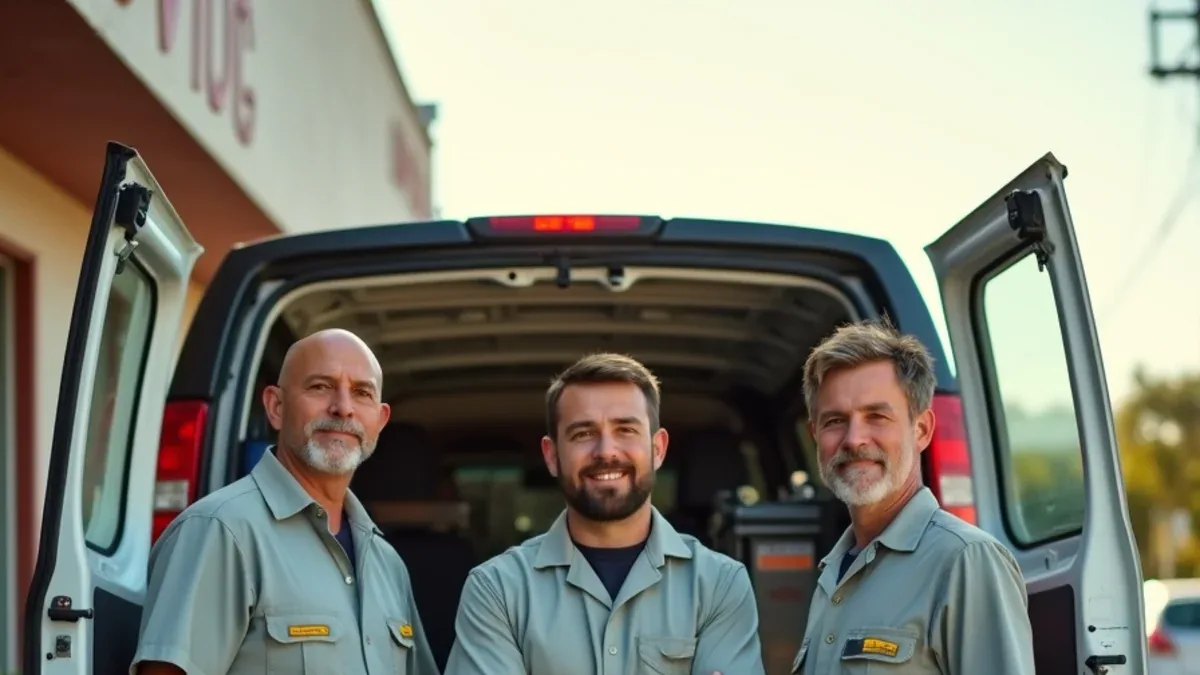
Locally owned
We are three minutes from downtown, not three states away
- IICRC-certified in water damage restoration, applied structural drying and applied microbial remediation.
- Licensed and insured California contractor — verify us on the CSLB lookup.
- Direct insurance billing, with documentation built for adjusters from the first hour.
- One project manager per job, from the first call to the last coat of paint.
Water does not wait for business hours. Neither do we.
Call now and a local person picks up. We will talk you through the shutoff while a crew is already on the way.
- 60-minute dispatch across Lafayette and Lamorinda
- IICRC-certified & insured
- Based on 3450 Golden Gate Way
Where we work
46 areas across Lafayette, Lamorinda and Contra Costa County
Lafayette neighborhoods
Cities & communities
- Contra Costa County
- Walnut Creek
- Orinda
- Moraga
- Pleasant Hill
- Concord
- Rossmoor
- Rudgear Estates
- Orinda Downs
- Sleepy Hollow
- Moraga Country Club
- Rheem Valley
- Monument Corridor
- Danville
- Alamo
- Diablo
- Blackhawk
- San Ramon
- Clayton
- Pittsburg
- Antioch
- Martinez
- Brentwood
- Berkeley
- Oakland
- Richmond
- Vallejo
- Dublin
- Livermore
- Oakland Hills
- Piedmont
What the work looks like
Jobs we handle across Lafayette and Lamorinda
These are illustrative examples of the jobs we handle, shown while we collect verified reviews from Lafayette customers. We will not publish a star rating or a customer name until it comes from a real, verifiable review. If we’ve worked on your property, we’d be grateful for an honest review.
A supply line let go behind the laundry wall while we were out. The crew was here inside the hour, pulled the baseboards, and had air movers running before dark. They photographed everything for the adjuster and walked us through the drying log every morning.
Homeowner · Happy Valley, Lafayette
Burst supply line, hillside home
Sample layout — awaiting verified review
Rain came down the slope and sat under the house for who knows how long. They found it with a moisture meter, pumped the crawl space, dried the subfloor, and told us exactly which downspout was the cause so it would not happen again.
Homeowner · Burton Valley, Lafayette
Crawl space flooding after an atmospheric river
Sample layout — awaiting verified review
A pipe above the suspended ceiling let go on a Saturday. They tarped, extracted and set containment so we could open Monday with half the floor still trading. The insurance paperwork was ready before the adjuster called.
Homeowner · Mt Diablo Boulevard, Lafayette
Commercial ceiling leak, downtown retail
Sample layout — awaiting verified review
From the field
Practical guidance from our crew

Oct 6, 20267 min
Should You File a Water Damage Insurance Claim?
A water claim is not free money. It is a trade between what you get paid now and what you pay in premium for years afterwards — and for small losses the trade is often bad.
Read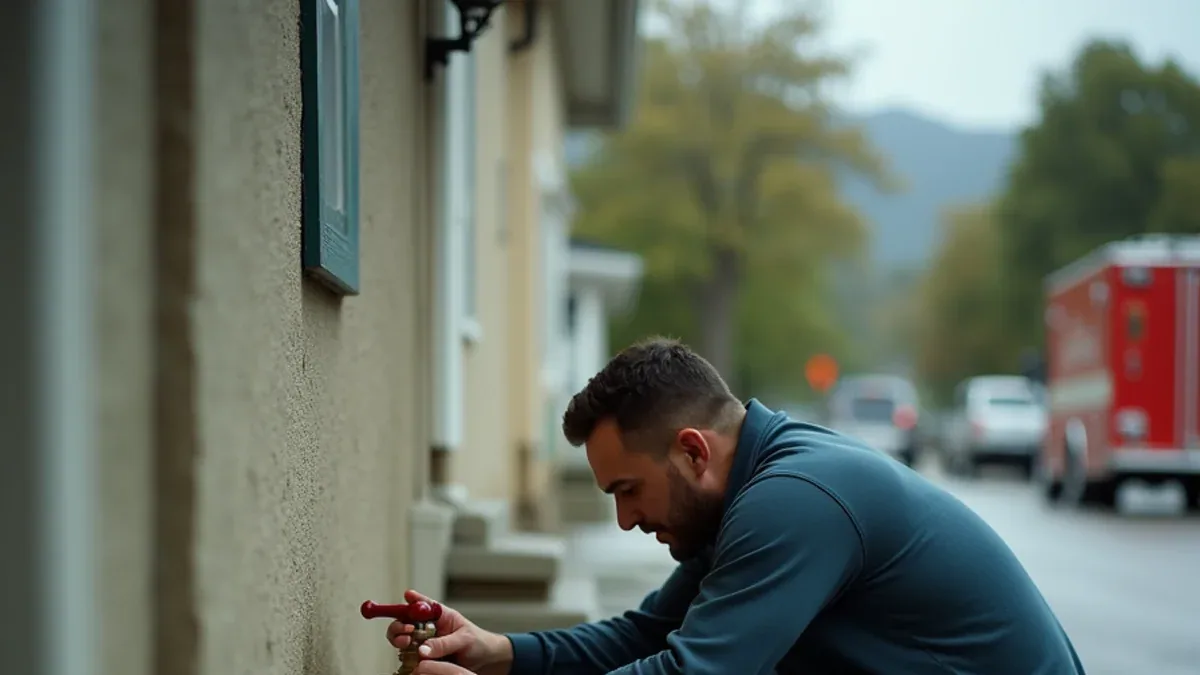
Aug 20, 20266 min
Burst Pipe? Your First-Hour Action Plan to Stop the Damage
A half-inch supply line at household pressure moves several gallons a minute. Everything that happens in the next sixty minutes decides whether this is a $3,000 job or a $30,000 one.
Read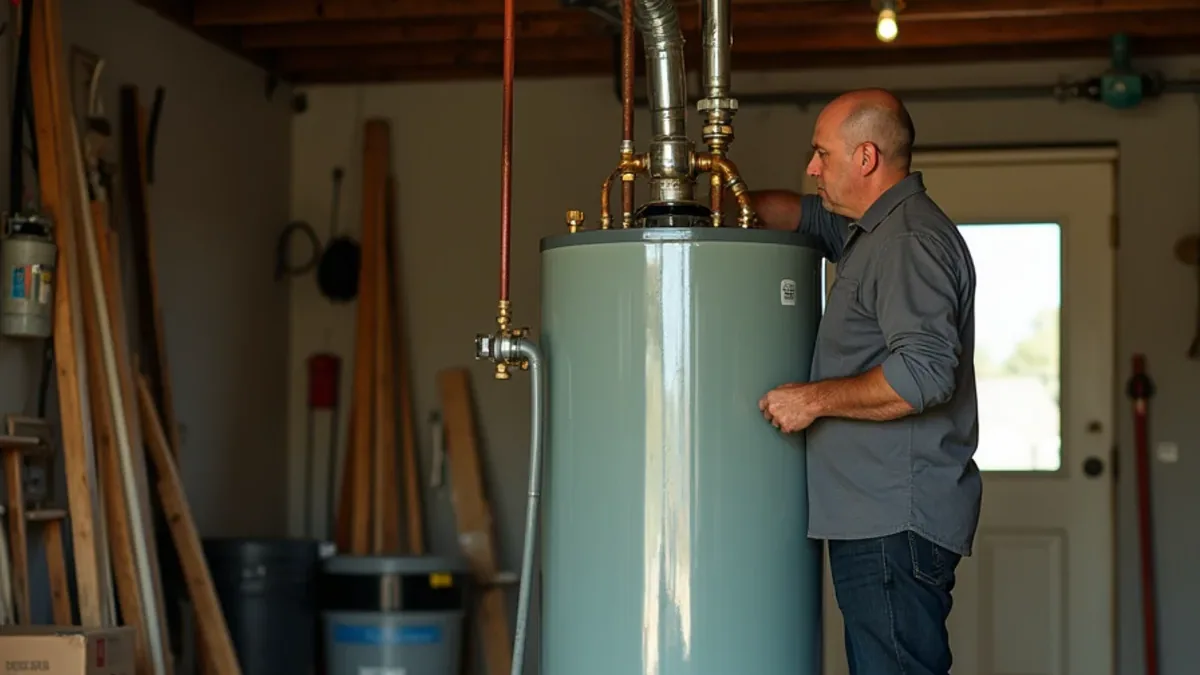
Aug 17, 20266 min
Water Heater Flooded the Garage: Emergency Steps Before Help Arrives
A failed tank does not just empty — it keeps refilling and emptying until someone closes the inlet. Here is the shutdown order, and the wall almost everybody forgets to check.
Read
Find us
3450 Golden Gate Way, Lafayette
Water Lafayette
Restoration Services
- Address
- 3450 Golden Gate Way
Lafayette, CA 94549 - 24/7 emergency line
- +1 (201) 277-9344
- Hours
- Open 24 hours — 7 days a week, including holidays
Estimates & scheduling: Mon–Sat, 7:00 AM – 7:00 PM
Questions
What people ask us on the phone
How fast can you get to my house in Lafayette?
We target a 60-minute dispatch across Lafayette and the wider Lamorinda area from our base at 3450 Golden Gate Way. Downtown, Burton Valley and the Reservoir area are typically 5 to 10 minutes of drive time; Orinda and Moraga are 10 to 16; Walnut Creek and Pleasant Hill are 12 to 25 depending on traffic. A local person answers the phone 24 hours a day and will give you an honest ETA for your specific street.
Do you really answer the phone at 2 a.m.?
Yes, every night of the year including holidays. A local person answers, gives you immediate safety instructions — where the shutoff usually is, what to do about power, what not to touch — and dispatches a crew. You will not get a voicemail box or a national answering service that sells your details to three contractors.
How much does water damage restoration cost?
In 2026, California water damage jobs commonly run roughly $1,200 to $5,000, with severe Class 4 losses reaching $20,000 to $100,000 or more. Mitigation runs about $3.50 to $4.50 per square foot for clean water and $7.00 to $7.50 for black water, and rebuild adds roughly $20 to $37 per square foot. The final number depends on the water category, damage class, materials affected and how long the water sat.
Will you work with my insurance company?
Yes. We bill your carrier directly, so you pay your deductible rather than fronting the whole job and waiting on reimbursement. We provide the adjuster with a moisture map, daily drying logs, a full photo set and a line-item scope written in the estimating format carriers already use, and we defend those line items with readings if anything is questioned.
How soon can mold start growing after water damage?
Under EPA and IICRC guidance, mold can begin growing on wet building materials within 24 to 48 hours. Warm, enclosed spaces such as Lafayette crawl spaces and closed wall cavities are the fastest to colonize, and they are also the places a homeowner is least likely to check. That window is why immediate extraction and monitored drying matter so much.
What should I do before you arrive?
Shut off the water at the appliance or the main, cut power to the affected area at the breaker panel if water is near outlets or appliances, get people and pets out of the wet area, then photograph and film everything before you move anything. After that, lift and block furniture and move rugs, electronics and documents to a dry room. Never use a household vacuum on standing water.
What is the difference between clean, gray and black water?
Category 1 clean water comes from a broken supply line, an overflowing sink or rain coming through an opening, and carries low health risk. Category 2 gray water comes from washing machine or dishwasher discharge, a urine-only toilet overflow or a sump pump failure, and carries bacteria and chemicals. Category 3 black water comes from sewage backups, toilet overflows with solids, or creek and storm flooding, and contains pathogens that require full PPE, containment and regulated disposal. Any category can escalate if the water sits.
Do I really need professional drying, or will it dry out on its own?
If water only touched sealed surfaces and you got it up within an hour, you may be fine. Once water has soaked into carpet pad, drywall, subfloor, insulation or a crawl space, evaporation alone leaves moisture in the assembly for weeks — long past the 24 to 48 hour mold window. Professional drying uses moisture meters and thermal imaging to find every wet pocket, then controls airflow and humidity until documented readings prove the structure is dry.
Are you licensed and certified?
We are a licensed and insured California contractor, and our technicians hold IICRC certifications in water damage restoration, applied structural drying and applied microbial remediation. Our CSLB license number and certification details appear in the footer of every page on this site — verify any contractor you are considering against the California Contractors State License Board lookup before signing anything.
Do you handle the repairs, or just the drying?
Both. We run the job from the first emergency call through to the last coat of paint — extraction, drying, contents, mold remediation where needed, insurance documentation and the rebuild. The only parts we hand to another licensed trade are the plumbing or roofing repair itself and certain specialty finishes, and we coordinate those directly so you are not managing three companies.
Last reviewed . We re-check the pricing, mold guidance and insurance detail on this page as conditions change.
Something out of date? Tell us.
Standing in water? Call the crew that is already nearby.
+1 (201) 277-9344 — answered by a local person, 24 hours a day, every day of the year.
- 60-minute dispatch across Lafayette and Lamorinda
- IICRC-certified & insured
- Based on 3450 Golden Gate Way