
The short answer
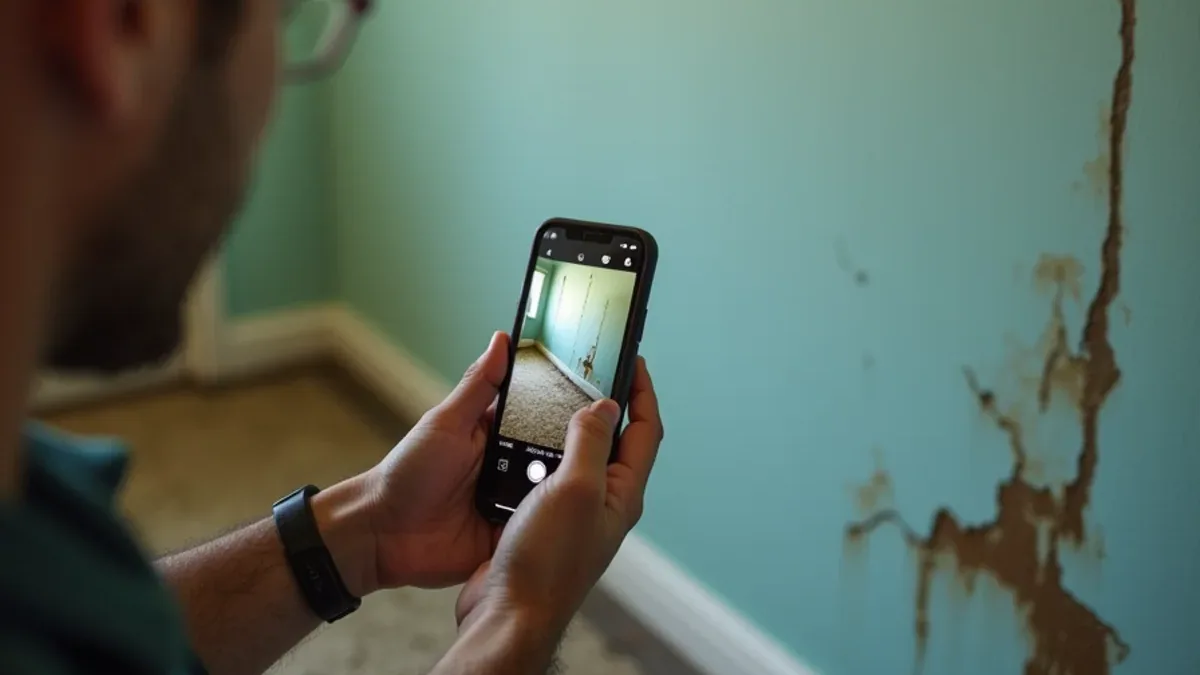
Photograph everything before you move anything: wide shots of each room, close-ups of the source, and the water line on every wall. Keep every receipt, including towels and fans. Video with narration beats stills. Over-shoot deliberately — you cannot go back and photograph a room after it has been dried.
Adjusters are not adversaries, but they can only pay for what they can see and justify. The difference between a claim paid in full and one negotiated downward is almost always the quality of the evidence, and most of that evidence has to be captured in the first hour — before cleanup destroys it.
Here is the complete list. It takes about twenty minutes.
Before you move anything
The first-hour photo set
- Wide shot of every affected room from the doorway, showing the whole space as you found it.
- The source itself, close up — the split pipe, the failed connector, the corroded tank base, the burst hose. This is the single most important photograph in the set.
- The water line on the wall, with a tape measure or a familiar object in frame for scale.
- The extent of standing water, photographed low so the spread is visible.
- Every wet item individually, before it moves. Furniture, rugs, boxes, electronics.
- The flooring, including any lifting, cupping or buckling.
- Ceilings and walls in adjacent rooms, showing where the water traveled.
- The exterior, if weather or roof damage was involved — from the ground, safely.
- A slow video walkthrough of the whole affected area, narrating what you are seeing and stating the date and time out loud.
During the work
- Anything hidden that gets exposed. Wet insulation, saturated subfloor, growth behind a baseboard, the inside of a wall cavity. These are things the adjuster will never see otherwise, and they justify scope.
- Equipment in place, showing how many units are running and where.
- Daily moisture readings. Your contractor should be producing these — make sure you get copies rather than assuming they will appear at the end.
- Materials removed, photographed before they leave the property, with a note of why.
- Progress shots, one set per day. They also establish the timeline.
The paper side
| Document | Why it matters |
|---|---|
| Claim number and the date you reported | Establishes prompt notice, which is a policy requirement |
| Every receipt for emergency purchases | Fans, dehumidifier rental, tarps, buckets, cleaning supplies — all normally reimbursable |
| Hotel, meals and laundry receipts | Additional Living Expenses coverage, if the home is uninhabitable |
| Water bill history | Objective evidence of when a hidden leak started |
| Contractor scope and moisture logs | The technical justification for every line item |
| Plumber invoice and report | Establishes the cause and that it was repaired |
| A written log of every conversation | Date, who you spoke to, what was agreed |
The contents inventory
This is where most claims lose the most money, because reconstructing what was in a room after it has been cleared is genuinely hard.
For every damaged item, record: what it is, brand and model where relevant, approximate age, approximate purchase price, and a photograph. A spreadsheet is fine. If you have original receipts or old photographs showing the item in the room, include them.
Do not throw anything away before the adjuster has seen it or explicitly released it, even things that are obviously ruined. If a health issue means something must go immediately — Category 3 contaminated items — photograph it thoroughly first and note why it was disposed of.
What a good contractor adds
Your photographs establish what happened. A restoration contractor's file establishes what it required, and adjusters weight it heavily because it is technical rather than anecdotal.
- A moisture map of the affected area with marked reading points.
- Daily readings at those same points, showing the drying trend and justifying every equipment day.
- Ambient conditions inside and outside the drying chamber.
- Thermal images where they show damage that is not visible.
- A line-item scope written in the estimating format carriers already work in.
- Water category and damage class, which drive the whole scope.
If your contractor is not producing this, ask why. It is the difference between the full drying period being approved and a negotiated guess. See water damage restoration in Lafayette.
Three things that quietly hurt claims
- Cleaning up first. Understandable, and it destroys the evidence for the damage you are claiming.
- Delaying the report. Prompt notice is a policy condition, and a gap of days invites questions about what happened in between.
- Not mitigating. Every policy requires reasonable steps to prevent further damage. Leaving a roof open or water sitting for a week can reduce payment on the additional damage.
For a walkthrough of what is covered in the first place, see does homeowners insurance cover water damage in California. We handle the documentation side as standard on every job across Moraga and the wider Lamorinda area.
Frequently asked
What photos do I need for a water damage claim?
Wide shots of every affected room from the doorway before anything moves, close shots of the source itself — the split pipe, failed connector or corroded tank — the water line on the wall with something for scale, every wet item individually, the flooring, adjacent rooms, and the exterior if weather was involved. Then a slow narrated video walkthrough stating the date and time.
Should I clean up before the adjuster comes?
No. Mitigate — stop the water, extract, start drying, because that is a policy obligation — but do not clean up the evidence before it is documented. Photograph everything first, and do not dispose of damaged items until the adjuster has seen them or released them. If something contaminated must go immediately for health reasons, photograph it thoroughly and note why.
What receipts should I keep?
Everything connected to the loss. Emergency purchases like fans, tarps, buckets and cleaning supplies are normally reimbursable. Hotel, meals above your normal spend, and laundry fall under Additional Living Expenses if the home is uninhabitable. Keep the plumber invoice, the contractor scope, and a written log of every conversation with dates and names.
What documentation should my restoration contractor give me?
A moisture map with marked reading points, daily readings at those points showing the drying trend, ambient conditions inside and outside the drying chamber, thermal images where they reveal non-visible damage, a line-item scope in the format carriers use, and a stated water category and damage class. If they are not producing this, ask why — it is what gets the full drying period approved rather than negotiated.