
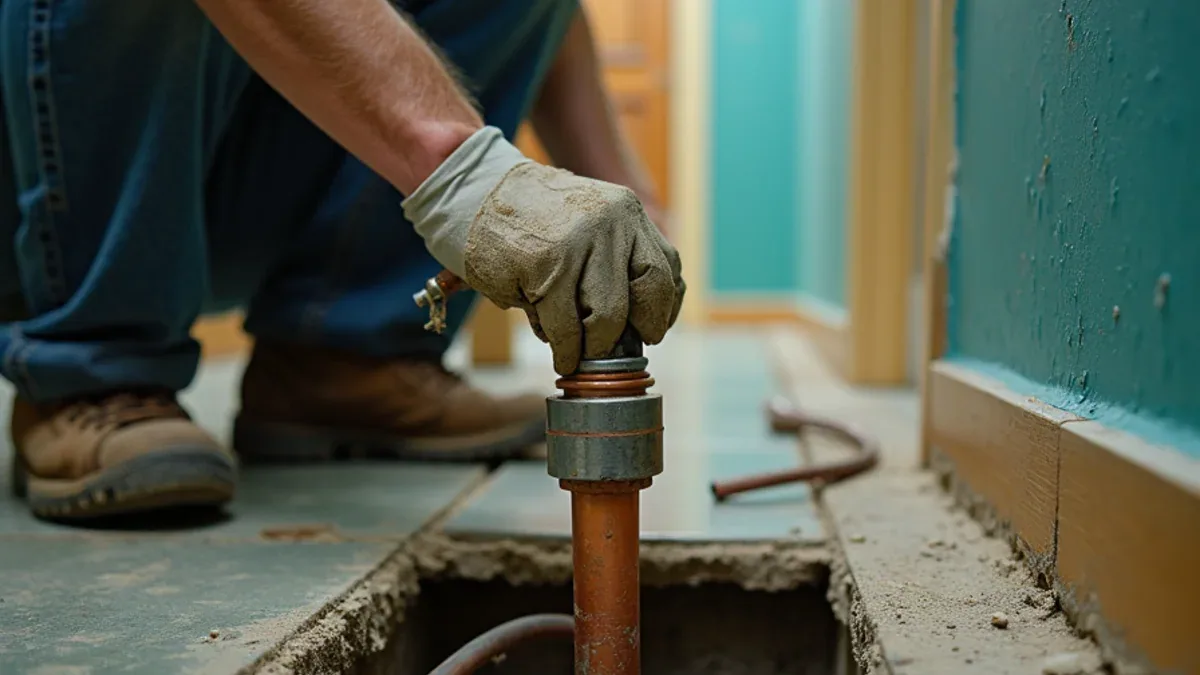
The short answer
Repair the first slab leak; repipe after the second. A spot repair fixes one failure in a pipe system that is aging everywhere at once, and insurance generally pays to access and repair the leak but not to replace sound plumbing. Two leaks in two years means the system is done.
When a slab leak is confirmed, you are choosing between three approaches, and the right answer depends less on the leak in front of you than on the condition of the rest of the system.
The three options
| Approach | What happens | Disruption | Best when |
|---|---|---|---|
| Spot repair | Open the slab at the located point, cut out and replace the failed section | One small opening, plus restoration of the flooring above | A single leak in a relatively young system, in an accessible location |
| Reroute | Abandon the failed line in the slab and run a new line overhead through attic or walls | Wall and ceiling openings at each end; no slab work | One or two leaks, or the leak sits under something you cannot open |
| Whole-house repipe | Replace the supply system, typically overhead in PEX or copper | Multiple wall and ceiling openings throughout, several days of work | Repeat leaks, a system past service life, or a second leak within a couple of years |
Epoxy pipe lining exists as a fourth option. It has its uses, but it is rarely the right answer for a single point failure under a slab.
The cost arithmetic people get wrong
Homeowners compare the plumbing quotes. That is the smaller half of the decision.
A spot repair means: locating the leak, cutting the slab, the plumbing repair, patching the concrete, replacing the flooring in the opened area, and then drying the slab and the wall bases the leak already wetted — which is 7 to 14 days of equipment because concrete is a Class 4 material. See slab leak water damage restoration.
Do that three times over five years and you have paid for the access, the flooring and the restoration three times over. A repipe is a single larger cost that ends the sequence.
What insurance actually pays
The general pattern in California, and it catches people out:
- Covered: the resulting water damage — wet flooring, wall bases, cabinetry, contents, and the drying.
- Usually covered: "tear-out and access" — the cost of cutting the slab and the flooring to reach the pipe, and putting it back. This is often a significant line.
- Not covered: the plumbing repair itself.
- Not covered: a repipe. That is a system upgrade, not damage.
So on a spot repair, the carrier frequently pays for most of the disruption and you pay the plumber. On a repipe, you pay for the repipe and the carrier still pays for the water damage the leak caused.
The duration problem
Where slab leak claims get contested is how long it had been running. A leak going for a year is easier for a carrier to characterize as gradual seepage rather than a sudden failure.
The most useful evidence is your EBMUD bill history. A clean step change in consumption between one period and the next effectively date-stamps when it started, and it is objective third-party data rather than anyone's recollection. Pull twelve months of statements before the adjuster conversation.
Reroute: the underrated middle option
People tend to think in terms of patch versus replace and miss the reroute, which is often the best answer for a specific awkward leak.
Instead of breaking concrete, the plumber abandons the failed run in the slab and installs a new line overhead through the attic and down inside walls to the fixtures it serves. The slab is never opened, so there is no concrete cutting, no slab drying, and no flooring replacement in the middle of a room.
It is particularly worth considering when the leak sits under a stone floor, a kitchen island, a tiled shower base, or anywhere the flooring is discontinued or irreplaceable — a common situation in the higher-value housing around Springhill and the custom builds elsewhere in Lafayette.
Questions to ask before you commit
- Where exactly is the leak, and how was it located? Thermal plus acoustic, or guesswork? Precision determines how much gets opened.
- Is this hot or cold? Hot-side leaks are far more common and often indicate the whole hot loop is aging.
- What is the pipe material and approximate age? That drives the repipe conversation.
- What is my static water pressure? Over 80 psi is over-stressing the entire system and needs fixing regardless.
- Have there been previous leaks? Including before you owned the house.
- What will the restoration cost on top of the plumbing? Ask this before, not after.
See leak detection services for how the location work is done, and call +1 (201) 277-9344 if you want a straight opinion on the restoration side before you commit to a plumbing approach.
Frequently asked
Does insurance cover slab leak repair?
It covers the resulting water damage and, in most policies, the tear-out and access needed to reach the pipe — cutting the slab and flooring and putting them back, which is often a significant line. It does not cover the plumbing repair itself, and it does not cover a whole-house repipe, which is a system upgrade rather than damage. Duration is the contested variable, so bring your water bill history.
When should I repipe instead of spot repairing?
A second slab leak in the same house within a couple of years is the practical threshold. Copper fails from the inside out across a whole system rather than at isolated unlucky fittings, so the second leak is telling you the condition of the rest. Each spot repair means paying for the access, the flooring and the restoration again — and the restoration is usually the larger number.
What is a reroute and when does it make sense?
The plumber abandons the failed line in the slab and runs a new line overhead through the attic and down inside walls to the fixtures it serves. The slab is never opened, so there is no concrete cutting, no slab drying and no flooring replacement mid-room. It is particularly good when the leak sits under stone, a kitchen island, a tiled shower base, or flooring that is discontinued or irreplaceable.
How do I prove when the slab leak started?
Your water bill history is the strongest evidence available. A continuously running leak produces a clean step change in consumption between one billing period and the next, and that is objective third-party data rather than anyone's recollection. Pull twelve months of statements before the adjuster conversation — it is frequently the difference between a sudden-event determination and a gradual-seepage one.