

Pleasant Hill is about eighteen minutes north from our Lafayette base up Pleasant Hill Road, and it produces a very particular kind of call for us: slab leaks.
This is one of the densest concentrations of original slab-on-grade housing in the county, all built within roughly the same fifteen years, all plumbed in copper. Call +1 (201) 277-9344.
A city of slabs, all the same age
Pleasant Hill built out heavily in the 1960s and 1970s, and unlike the Lamorinda hills — where raised foundations over crawl spaces dominate — a very large share of the housing here sits on slab-on-grade. Copper supply lines run in or under that concrete.
Copper under a slab fails in a specific way. It corrodes from both sides, and where it was not properly sleeved it abrades against the concrete as the slab moves seasonally with the expansive clay soil beneath. Hot-water lines go first, because higher temperature accelerates both processes. Sixty years in, the entire cohort is arriving at the same point together.
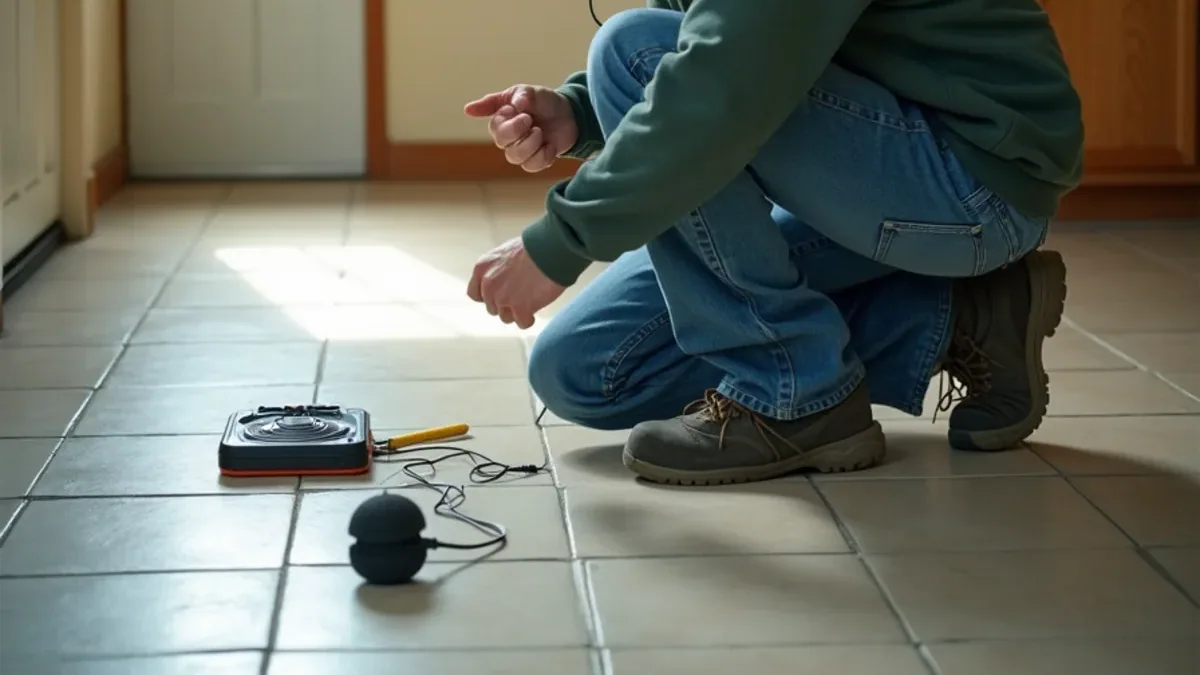
The practical consequence is that Pleasant Hill generates more slab leak work for us per household than anywhere else we serve. It is also why we invested in proper acoustic and tracer-gas detection equipment rather than relying on exploratory demolition — see leak detection.
The rest of what we see here
- Water heater failures in attached garages, on the same aging-cohort logic as the plumbing. See water heater leak cleanup.
- Angle stops and supply connectors at fixtures, which fail regardless of house age and are the most common single point of failure anywhere.
- Winter surface water in the flatter parts of the city, where drainage rather than slope is the issue — blocked area drains and gutters, and streets that pond.
- Sewer laterals on the older streets with mature street trees.
- The [Monument Corridor](/service-areas/pleasant-hill-monument/), our densest single pocket of the 1960s–70s slab housing described above.
Slab drying, and why it takes longer than people expect
When a slab leak is repaired, the restoration is not finished — the concrete is wet, the wall bases the water wicked into are wet, and often the flooring above is finished.
Concrete is a Class 4 material. It holds moisture in its mass and releases it slowly, so slab drying commonly runs seven to fourteen days with specialty mat systems and dehumidification sized to the load, well after everything above it reads dry to the touch. That is normal and it is not padding — see structural drying and dehumidification for how the daily readings work.
The flooring decision usually matters more than the drying. Tile over a wet slab is normally salvageable. Engineered wood, laminate and glue-down luxury vinyl over a wet slab usually are not, because the moisture is trapped underneath and the core has already swollen. We assess honestly and show you the readings rather than defaulting to replacement.
Getting to you
Pleasant Hill Road runs directly from Lafayette to Pleasant Hill, which typically puts us on your street in 15 to 22 minutes. The Contra Costa Boulevard corridor and the areas near Diablo Valley College are at the further end of that range; the southern part of the city closer to Walnut Creek is quicker.
Around Pleasant Hill
Streets, roads and landmarks we work around in this area — and the ZIP codes we cover: 94523.
- Contra Costa Boulevard
- Pleasant Hill BART
- Diablo Valley College
- Downtown Pleasant Hill
- Gregory Lane
- Monument Corridor
Why Pleasant Hill residents choose us
Every restoration company claims 24/7 and certification. These are the reasons that are specific to working in Pleasant Hill.
Fifteen to twenty-two minutes up Pleasant Hill Road
Southern Pleasant Hill is quicker; the Contra Costa Boulevard and Diablo Valley College end is at the further edge of that range.
This is our highest-volume slab leak market
A dense 1960s and 70s slab-on-grade cohort with copper cast into or beneath the concrete, all arriving at failure age together. We invested in tracer gas equipment largely because of streets like these.
We locate before anyone breaks concrete
Thermal, then acoustic, then tracer gas if needed — marked to within about six inches so your plumber opens one small area instead of exploring.
Honest slab drying schedules
Concrete is Class 4 and releases moisture for seven to fourteen days after the surface reads dry. We quote that upfront rather than pulling equipment early.
Licensed and insured California contractor · IICRC-certified to the S500 water damage and S520 mold remediation standards · Dispatching to Pleasant Hill from 3450 Golden Gate Way, Lafayette, CA 94549.
You do not need to know what to ask for
Cleanup, extraction, removal, mitigation, restoration — people use all five words for the same job, and nobody expects you to know which one Pleasant Hill needs. Describe what you can see and we will work out the rest.
A local person answers
Not a call center selling your emergency on to whoever bids for it.
First question
Where is the water coming from, and can you get to the shutoff? That decides whether we talk you through it or send someone the 18 minutes to Pleasant Hill first.
Then we move
60-minute dispatch, and we talk you through the shutoff while the crew is loading.
Free, no-obligation inspection with moisture readings and a written assessment. We bill your insurer directly.
Pleasant Hill water damage FAQs
Why are slab leaks so common in Pleasant Hill?
Because a very large share of the city was built slab-on-grade in the 1960s and 1970s with copper supply lines running in or under the concrete, so the whole cohort is reaching the end of its service life at the same time. Copper under a slab corrodes from both sides and abrades against the concrete as it moves seasonally with the expansive clay soil beneath. Hot-water lines fail first because temperature accelerates both processes.
How do you find a slab leak without breaking up the floor?
Thermal imaging first, because a hot-water leak warms the concrete above it in a line an infrared camera reads clearly. Then acoustic pinpointing with ground microphones, which typically narrows it to within about six inches. For difficult cases — a cold-water leak, a thick slab, stone flooring, or high ambient noise — we drain the line and use tracer gas. The plumber then opens one small area rather than exploring.
How long does a Pleasant Hill slab take to dry after the repair?
Seven to fourteen days is normal, and occasionally longer. Concrete is a Class 4 material that holds water in its mass and gives it back slowly, so it keeps releasing moisture well after the surface reads dry. We use specialty drying mats on the slab with dehumidification sized to the load and take daily readings, so the schedule is set by the numbers rather than by the calendar.
Will my floor survive a slab leak?
Tile over a wet slab is usually salvageable. Engineered wood, laminate and glue-down luxury vinyl usually are not, because the moisture is trapped underneath the finish and the core swells before anyone notices. Solid hardwood over a slab is case by case and depends on how long the leak ran. We take readings and show them to you rather than defaulting to replacement, because flooring is normally the largest line on the rebuild.
Guides relevant to Pleasant Hill
Sewage Backup Cleanup Costs — and Whether Your Insurance Will Actually Pay
Category 3 mitigation runs roughly double a clean water loss — and the coverage most people assume they have is usually an endorsement they declined.
ReadProperty Manager's Guide to Tenant Water Damage: Who's Responsible for What in California
The technical work in a rental is identical. What is different is that three parties are involved, and the delay while they work out who pays is what costs the money.
Read