
The short answer
Sewage is Category 3 from the first minute, so the work involves containment, PPE, removal of every porous material it touched, and documented sanitizing — which is why it costs more than clean-water work. Coverage usually depends on whether your policy carries a sewer and drain backup endorsement.
Sewage backups are the most expensive residential water loss per square foot, and the most likely to be uninsured. Both facts come as a surprise at exactly the wrong moment.
Why Category 3 costs roughly double
Mitigation for Category 3 runs about $7.00 to $7.50 per square foot against $3.50 to $4.50 for clean water. The water is not the reason — the protocol is.
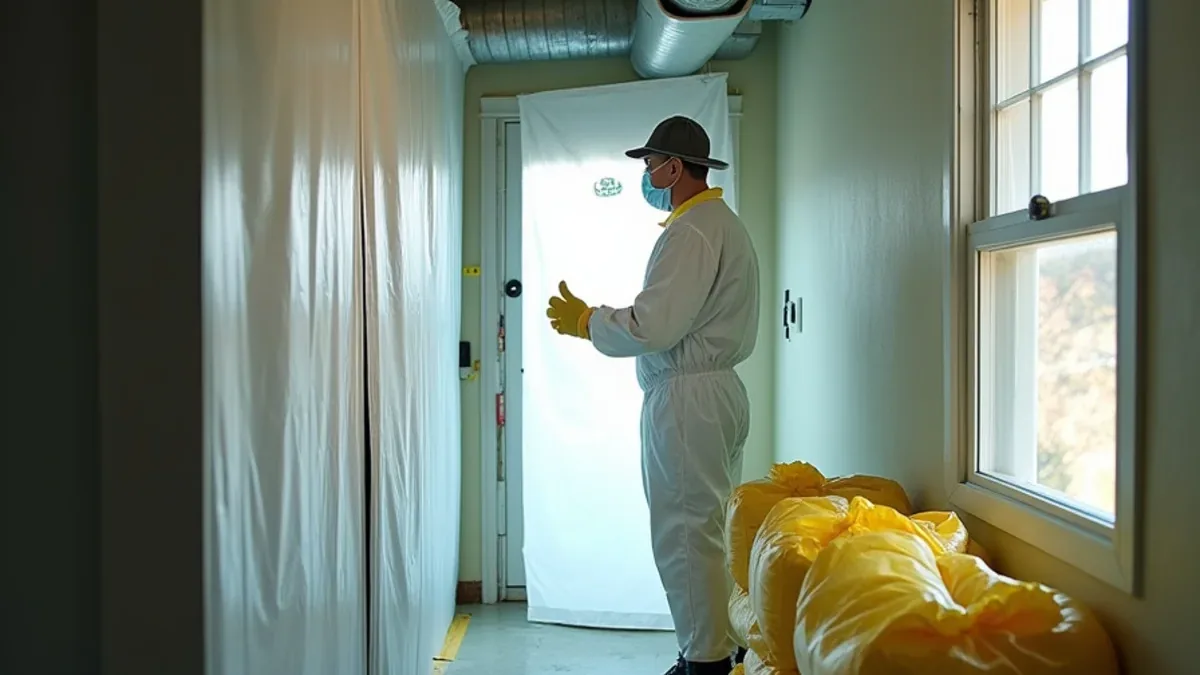
- Sealed containment and negative air pressure before any work begins, so contamination cannot migrate into clean parts of the house.
- Full PPE for every person on site, for every hour.
- Essentially all porous material removed, not dried. Carpet, pad, insulation, drywall cut above the wick line, particleboard cabinet bases, anything upholstered. There is no drying-in-place option, because the contamination is inside the material rather than on it.
- Regulated disposal of both the extracted water and the removed materials, billed by volume.
- Clean then disinfect as two separate steps — detergent cleaning first, because disinfectant does not work through organic soil, then an EPA-registered antimicrobial at full dwell time.
- Odor source removal, which means finding residual contamination rather than masking it.
- Post-remediation verification before the space is put back.
Then the rebuild on top, at roughly $20 to $37 per square foot for standard finishes — and in a sewage loss, more of the building needs rebuilding because more of it came out. See sewage cleanup and backup removal.
The insurance problem
Here is what catches people: most standard California homeowners policies exclude sewer and drain backup unless a specific endorsement was added.
That endorsement — usually called water backup or sewer backup coverage — is typically inexpensive, often a modest annual amount. Many people declined it without registering the choice, because it appeared as one line among many at policy inception.
Check your declarations page now for the words "water backup" or "sewer backup," and note the sublimit next to it. That limit is frequently well below the dwelling limit — commonly $5,000, $10,000 or $25,000 — and a whole-floor Category 3 loss with rebuild can exceed the lower end of that range comfortably.
When it might be covered another way
- A covered peril caused the backup. If a sudden pipe failure produced it rather than a gradual blockage, coverage may attach differently.
- The blockage was in the public main, not your lateral. In most Contra Costa jurisdictions the property owner is responsible for the lateral from the house to the main, including the portion under the street. But if the responsible agency's main surcharged or blocked, they may be liable — which is exactly why we document where the blockage was, not just the damage inside.
- A neighbor's negligence caused it. Rare, but it happens in shared-lateral situations.
- Service line coverage, a different endorsement, may cover damage to the buried lateral itself as distinct from the backup damage.
What the total actually looks like
| Scope | What is involved | Rough bracket |
|---|---|---|
| One bathroom, caught immediately | Containment, extraction, tile and hard surfaces cleaned, minimal removal | Low four figures |
| A bathroom plus adjoining hallway carpet | Carpet, pad and lower drywall removed, contained, dried | Mid four figures |
| A finished lower level | Extensive porous removal, multi-room containment, extended drying | Five figures |
| Whole ground floor with cabinetry | Kitchen and bathroom cabinet bases, flooring throughout, full rebuild | Well into five figures |
Plus the plumbing: clearing the blockage, a camera inspection, and — if roots have destroyed the lateral — lining or replacement, which is a separate significant cost.
The prevention arithmetic
On wooded lots across Pleasant Hill, Lafayette and Orinda, the recurring cause is root intrusion into an aging clay or cast-iron lateral. That produces a predictable pattern: backups every year or two, each one a Category 3 cleanup.
- A camera inspection costs a small fraction of one cleanup and tells you the actual condition of the line.
- Lining or replacing the lateral costs meaningfully less than two Category 3 cleanups, and it ends the sequence.
- A backwater valve closes automatically if flow reverses, and is the single most effective protection against a main-line surcharge.
- The endorsement, which costs very little a year.
Rootering the line again is the option that feels cheapest and is not — it clears the mat while leaving every entry point intact.
Frequently asked
How much does sewage backup cleanup cost?
Category 3 mitigation runs roughly $7.00 to $7.50 per square foot against $3.50 to $4.50 for clean water, plus rebuild at roughly $20 to $37 per square foot. A single bathroom caught immediately is low four figures; a bathroom plus hallway carpet is mid four figures; a finished lower level or a whole ground floor with cabinetry runs into five figures. The plumbing repair to the lateral is separate.
Does homeowners insurance cover a sewage backup?
Usually only with a specific water backup or sewer backup endorsement, which many standard California policies exclude by default. Check your declarations page for those words and note the sublimit next to them — it is frequently well below the dwelling limit, commonly $5,000, $10,000 or $25,000. The endorsement itself is typically inexpensive and is one of the highest-value additions available.
Who is responsible if the blockage is in the street?
In most Contra Costa County jurisdictions the property owner is responsible for the sewer lateral from the house to the main, including the portion running under the street or sidewalk. If the blockage or surcharge was in the public main rather than your lateral, the responsible agency may be liable for damages — which is exactly why we document the location of the blockage and not just the damage inside the house.
Is it cheaper to keep rootering the line or replace it?
Replace it, if the pattern is established. Rootering clears the root mat so the line drains again, but every entry point at the pipe joints remains and the roots regrow — you are buying eighteen months. Lining or replacing the lateral costs meaningfully less than two Category 3 cleanups, and a camera inspection first costs a small fraction of one.