

Nobody goes into a crawl space. That is exactly the problem — it is the one part of a Lafayette house that can hold standing water for a month before anyone notices, and it sits directly under your floor.
We pump it, strip the saturated insulation and vapor barrier, dry the joists and subfloor from below, and tell you which downspout or drain let the water in. Call +1 (201) 277-9344.
Signs you need flooded basement & crawl space cleanup
If you recognize two or more of these, the problem is already past the point where waiting is cheaper.
A musty smell upstairs with no visible source
Air moves up from the crawl space. This is the most common first symptom of a wet crawl space.
Cold or springy floors
Missing or collapsed insulation, usually because it got wet and fell.
Insulation hanging down from the joists
Saturated fiberglass loses its grip. Visible from the access hatch.
Standing water or mud visible at the hatch
Needs pumping. Also means the vents or the grade let surface water in.
Condensation on ducting or plumbing under the house
Crawl space humidity is high enough for mold, even with no standing water.
Rusting duct straps, hardware or pier bases
Chronic moisture. It has been like this for a while.
Crawl spaces, not basements — and why that matters here
Full basements are relatively uncommon in this part of Contra Costa County. What most Lafayette homes have instead is a vented crawl space — anywhere from 18 inches to well over three feet of clearance between the ground and the underside of the floor, with concrete piers, wooden posts and girders, and a soil floor that may or may not have a vapor barrier over it.
That construction has one significant advantage and one significant weakness. The advantage is that water in a crawl space is not water in your living room. The weakness is that it is enclosed, dark, warm in summer, and against bare soil — every condition mold needs — and nobody looks. On the split-level and hillside homes across Burton Valley, Springhill and Reliez Valley, the crawl space is often stepped, so water pools in the low section where you cannot see it from the access hatch.
How the water gets in
| Cause | What it looks like | What fixes it |
|---|---|---|
| Surface runoff off a slope | Water enters through foundation vents on the uphill side after heavy rain | Regrading, a swale or a French drain uphill of the foundation |
| Downspout discharging at the foundation | Localized saturation and a wet patch directly below one downspout | Extend the discharge 2–3 m away from the building |
| Blocked or silted area drains | Yard standing water, drains overflowing during rain | Jetting or replacing the drain line and cleaning the grates |
| Failed or absent vapor barrier | Chronically damp soil, high humidity, no standing water | New 6-mil barrier lapped and sealed to the piers and walls |
| A plumbing leak above | Localized dripping and wet joists with dry soil elsewhere | Plumber repair, then drying — see leak detection |
| High seasonal groundwater | Water rising from the soil, worst on the downhill side | A sump basin and pump, plus perimeter drainage |
What we do down there
Assess before entering
Confined-space check, electrical hazards, structural condition of piers and posts, and depth and contamination of the standing water. Storm water in a crawl space is Category 3 by default.
Pump out and remove debris
Submersible pumps for the bulk volume, then the silt, washed-in vegetation and any rodent contamination that came with it.
Strip saturated materials
Wet fiberglass insulation between the joists comes out — it holds water indefinitely and never recovers its R-value. Torn or water-filled vapor barrier comes out. Anything stored down there and now contaminated comes out.
Clean and treat
Joists, subfloor underside, girders and piers cleaned, then treated with an antimicrobial. Where growth has established, we contain and remediate properly — see mold remediation.
Dry the structure from below
Air movers and dedicated dehumidification in the crawl space with the vents managed, and daily readings from the joists and the subfloor. Crawl spaces are slow — 5 to 12 days is normal because the soil keeps giving moisture back.
Reinstate and advise
New vapor barrier and, where warranted, new insulation. Then a straight conversation about the drainage or downspout that caused it, with a written note of what we saw.
Why the smell in the hallway comes from under the house
Air in a house moves upward — warm air rises and escapes through the upper levels, drawing replacement air in from below. In a home over a vented crawl space, a meaningful share of the air you breathe upstairs started in that crawl space, coming up through floor penetrations, plumbing chases and gaps around ducting.
That is the mechanism behind the most common call we get on this: a musty smell in a hallway or a closet with no visible source anywhere in the living space. The source is six feet below the floor. It is also why a wet crawl space is an indoor air quality problem and not just a structural one.
Basements and lower levels
Where a property does have a finished lower level — more common on the steeper hillside lots and in some of the custom builds in Happy Valley and Orinda Downs — the job changes. Now there is finished flooring, drywall, insulation, built-in cabinetry and often a mechanical room to deal with, and the cut lines and material decisions follow the same logic as any flood cleanup.
The important difference is hydrostatic pressure. Water pushing against a below-grade wall does not stop when the rain stops, so a lower-level intrusion often needs the drainage addressed before reinstatement is worth doing. We will say so rather than putting new drywall over a wall that will be wet again in March.
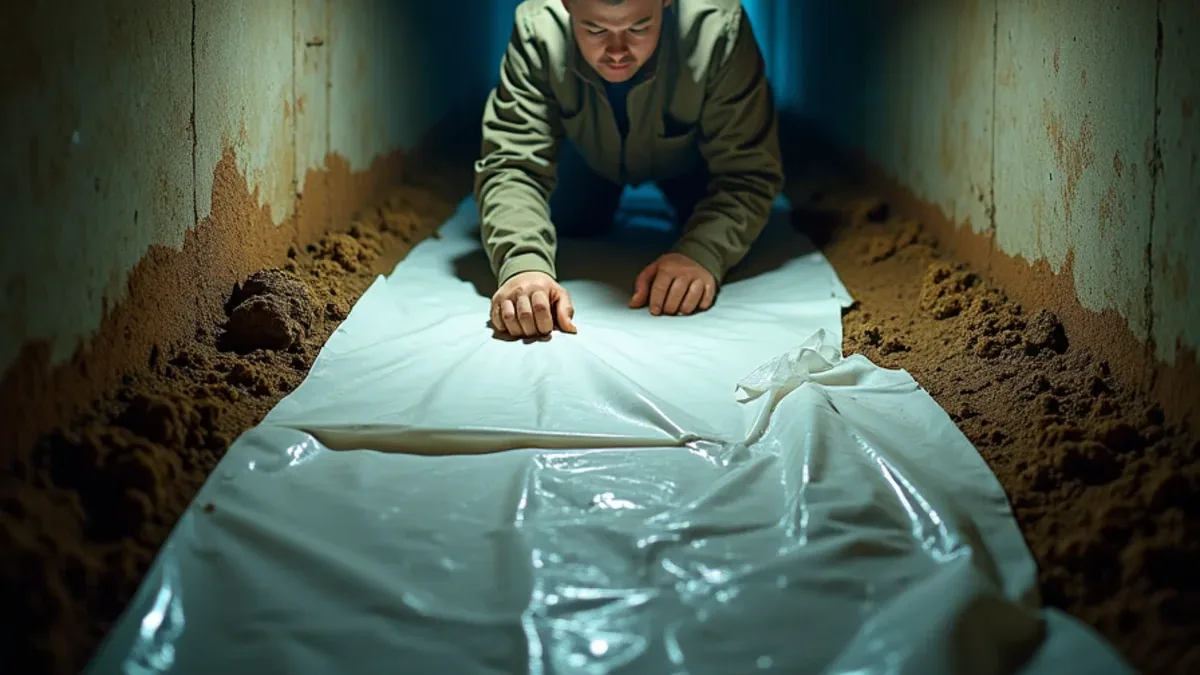
You do not need to know what to ask for
You do not have to know whether this is flooded basement & crawl space cleanup, extraction, mitigation or a full restoration — those are stages of one job and sorting out which you need is our work, not yours.
A local person answers
Not a call center selling your emergency on to whoever bids for it.
First question
Has the water stopped? Everything about flooded basement & crawl space cleanup changes depending on whether it is still arriving.
Then we move
60-minute dispatch, and we talk you through the shutoff while the crew is loading.
Free, no-obligation inspection with moisture readings and a written assessment. We bill your insurer directly.
Our flooded basement & crawl space cleanup process
Six steps, documented at every stage, with the daily readings that prove it.
Confined-space assessment
Hazards, structure, water depth and contamination category checked before entry.
Pump and clear
Standing water pumped out, silt and debris removed.
Strip wet materials
Saturated insulation and vapor barrier removed and bagged.
Clean and treat
Joists, subfloor, girders and piers cleaned and antimicrobial applied.
Dry and monitor
Dedicated crawl space drying with daily readings — typically 5 to 12 days.
Reinstate and diagnose
New barrier and insulation, plus a written note on the drainage cause.
What drives the price
We are not going to quote a number over the phone — nobody can scope a water loss without walking the property. These are the factors that decide it.
- Clearance height and access
- A 45cm crawl space costs considerably more per square foot to work in than one you can kneel in.
- Volume of standing water and silt
- Pumping is quick; shovelling silt out of a low crawl space is not.
- Insulation and barrier replacement
- Square footage of material removed and reinstalled, plus disposal.
- Length of drying schedule
- Soil keeps releasing moisture, so crawl spaces run longer than any other drying job.
- Whether mold has established
- If growth is present, containment and remediation protocol applies and the scope changes substantially.
- Drainage remediation
- Downspout extensions and drain clearing are minor. A new French drain or sump system is a separate trade and a separate budget.
Why choose Water Lafayette for flooded basement & crawl space cleanup
Not the generic badges every restoration site carries — the things that actually change the outcome on this particular job.
We actually go under the house
Confined-space assessment before entry, then pumps, silt removal and drying from below. Plenty of crews quote a crawl space from the hatch and price the guess.
Saturated insulation comes out, not left to dry
Wet fiberglass holds water for months, never recovers its R-value and sags off the joists. Drying around it is the single most common reason a crawl space job fails.
We understand why the smell is upstairs
Air moves up out of a crawl space into the living area. A musty hallway closet with no visible source is almost always a wet crawl space, and we check there first.
Longer schedules, honestly quoted
Soil keeps giving moisture back, so crawl spaces run five to twelve days rather than three. We tell you that at the start instead of pulling equipment early to hit a number.
We name the drainage cause before we leave
A downspout discharging at the foundation, a silted area drain, or vents packed with oak litter. Fixing it costs a fraction of doing this again next winter.
Licensed and insured California contractor · IICRC-certified to the S500 water damage and S520 mold remediation standards · 60-minute dispatch across Lafayette and Lamorinda · Based at 3450 Golden Gate Way, Lafayette, CA 94549.
Flooded Basement & Crawl Space Cleanup FAQs
How do I know if my crawl space has flooded?
Open the access hatch and shine a torch — do not go in. Look for standing water or mud, insulation hanging down from the joists, a torn or floating vapor barrier, and condensation on ducting or plumbing. Upstairs, the giveaway is a musty smell in a hallway or closet with no visible source, because air moves upward out of the crawl space into the living space.
Can I just let a crawl space dry out on its own?
Not reliably, and not in winter. A vented crawl space in a Lafayette rainy season is surrounded by air at or near saturation, so opening the vents adds moisture rather than removing it. Meanwhile the soil holds water and the joists and subfloor above stay wet — comfortably past the 24 to 48 hour window in which mold can begin growing. Proper drying uses dedicated dehumidification with the vents managed, and takes daily readings from the framing.
Does the wet insulation really have to come out?
Yes. Saturated fiberglass batts hold water for months, never recover their insulating value, sag away from the joists, and become an excellent substrate for growth. They are also relatively inexpensive to replace compared with the cost of drying around them and the risk of leaving them in. The vapor barrier comes out too if it is torn or holding water on top of it.
Why does my crawl space flood every winter?
Almost always surface water rather than groundwater. The usual culprits are a downspout discharging within a foot of the foundation, a blocked or silted area drain, landscaping that has been regraded so the fall now runs toward the house, or a hillside with no swale above it directing runoff around the building. All of these are fixable and all of them are cheaper than an annual crawl space cleanup. We will tell you which one we saw.
Is crawl space flooding covered by insurance?
It depends entirely on where the water came from. A plumbing failure above the crawl space is generally a covered sudden and accidental loss. Surface water and groundwater intrusion from a storm is normally excluded from a standard homeowners policy and falls under flood insurance. We document the entry path and the cause precisely, so if part of the loss is covered it is not denied along with the part that is not.
Related reading
Hillside Drainage 101: What Every Lafayette Homeowner on a Sloped Lot Should Know
Your house is not just sitting on a hill — it is sitting on a system somebody built decades ago, and every part of that system fails silently.
ReadGutters, Downspouts, and Hillside Drainage: A Pre-Rainy-Season Checklist for Lamorinda Homes
A roof, a gutter, a downspout and a buried drain line are one continuous system. It only takes one broken link to put water against your foundation.
Read