

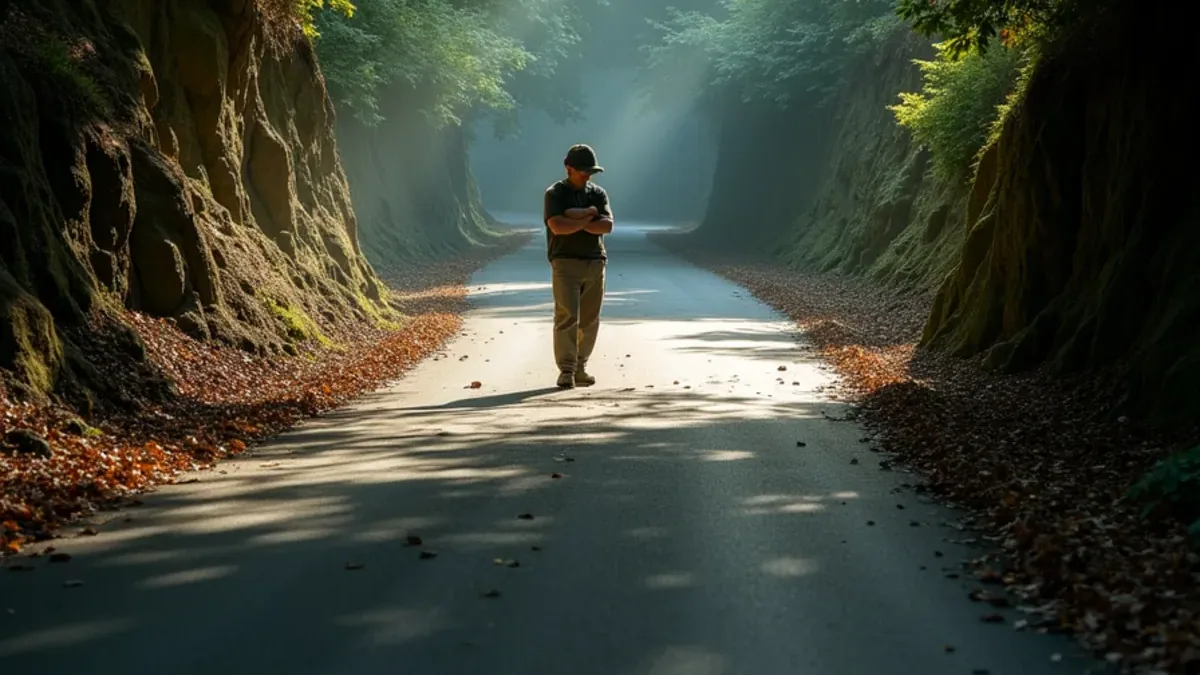
Sleepy Hollow is a wooded canyon community in Orinda, about fourteen minutes from our base once you allow for the narrow approach roads.
It sits in a Cal Fire Very High Fire Hazard Severity Zone, and it has the steepest drainage and the heaviest canopy of anywhere we regularly work. Call +1 (201) 277-9344.
Canyon topography, concentrated water
The canyon setting that makes Sleepy Hollow beautiful is also what concentrates water. Slopes on both sides feed the same low ground, and during an atmospheric river the volume that arrives at the canyon bottom is disproportionate to the rain falling on any single property.
Homes cut into these slopes have substantial retained soil against them, and the drainage systems managing that soil are frequently decades old. Blocked weep holes, silted perimeter drains and collapsed subsurface pipe all build hydrostatic pressure that the walls were not designed to carry. See flood cleanup and flooded basement and crawl space cleanup.
Very High Fire Hazard Severity Zone
The Very High designation is the highest Cal Fire category, and it drives real behavior here — defensible space clearing, hardened construction, and a significant number of properties with exterior ember-defense sprinkler or misting systems.
Those systems are worth having and they are also a water damage source. They sit unpressurized for eleven months while risers corrode, plastic goes brittle and solenoid valves seize, then fail on a seasonal test or an automatic trigger and discharge into a wall assembly or a foundation with nobody home. Test annually, know your isolation valve, and check nothing discharges at a soffit or foundation vent.
The second exposure is fire suppression water, which routinely causes more damage than the fire itself and needs the same monitored structural drying as any other loss. The third is post-fire: burnt slopes repel water for several seasons, so a fire anywhere above the canyon materially raises the following winter's runoff and debris-flow risk. See storm damage cleanup.
The canopy, and the laterals underneath it
Sleepy Hollow has the heaviest tree cover of anywhere we work. That means two things: relentless leaf litter blocking gutters, valleys, area drains and crawl space vents, and the most sustained root pressure on sewer laterals we encounter.
On an original clay or cast-iron line under this much canopy, root intrusion is not a possibility — it is a schedule. Camera inspection tells you where you are on it, and it costs a fraction of a Category 3 sewage cleanup.
Around Sleepy Hollow
Streets, roads and landmarks we work around in this area — and the ZIP codes we cover: 94563.
- Sleepy Hollow Lane
- Orinda canyon roads
- Cal Fire Very High Fire Hazard Severity Zone
- Dense oak and bay canopy
- Steep canyon slopes
Why Sleepy Hollow residents choose us
Every restoration company claims 24/7 and certification. These are the reasons that are specific to working in Sleepy Hollow.
Fourteen minutes, with narrow approach roads
Canyon access is part of the assessment. In a serious storm or fire event those roads can be cut in both directions.
Very High Fire Hazard Severity Zone experience
Ember-defense sprinkler failures, fire suppression water that exceeds the fire damage, and post-fire hydrophobic slopes that shed water for several seasons. All three are jobs we take.
The heaviest canopy in our service area
Root pressure on laterals here is the most sustained we encounter. On an original clay line under this much tree cover, intrusion is a schedule rather than a possibility.
Canyon drainage assessed before restoration
Slopes on both sides feed the same low ground. We look at what is above the property before anyone works below it.
Licensed and insured California contractor · IICRC-certified to the S500 water damage and S520 mold remediation standards · Dispatching to Sleepy Hollow from 3450 Golden Gate Way, Lafayette, CA 94549.
You do not need to know what to ask for
Cleanup, extraction, removal, mitigation, restoration — people use all five words for the same job, and nobody expects you to know which one Sleepy Hollow needs. Describe what you can see and we will work out the rest.
A local person answers
Not a call center selling your emergency on to whoever bids for it.
First question
Where is the water coming from, and can you get to the shutoff? That decides whether we talk you through it or send someone the 14 minutes to Sleepy Hollow first.
Then we move
60-minute dispatch, and we talk you through the shutoff while the crew is loading.
Free, no-obligation inspection with moisture readings and a written assessment. We bill your insurer directly.
Sleepy Hollow water damage FAQs
Can you reach Sleepy Hollow during a major storm?
Usually, but we will be honest if the approach roads are compromised. Much of Sleepy Hollow is served by narrow canyon roads with limited alternatives, and in a serious event access can be cut in both directions. If we cannot get to you safely we will say so and talk you through pumping, isolating power and protecting contents until we can.
What does a Very High Fire Hazard Severity Zone mean for water damage?
Two direct exposures and one indirect. Directly: exterior defensible-space sprinkler systems that sit unused eleven months a year and fail on a seasonal test, and fire suppression water, which routinely causes more damage than the fire and needs the same monitored drying as any other loss. Indirectly: burnt slopes repel water for several seasons, so a fire above the canyon substantially raises the following winter's runoff and debris-flow risk.
Why is drainage such a problem in Sleepy Hollow specifically?
Canyon topography concentrates it. Slopes on both sides feed the same low ground, so the water arriving at the canyon bottom is far more than the rain falling on any single property. Homes cut into those slopes carry substantial retained soil against them, and the perimeter drains, weep holes and subsurface pipe managing it are frequently decades old and silted, collapsed or blocked.
How bad is the tree root problem on sewer lines here?
It is the heaviest canopy in our service area, so root pressure on laterals is the most sustained we encounter. On an original clay or cast-iron line under this much tree cover, intrusion is not a possibility — it is a schedule. A camera inspection tells you where you are on that schedule, and it costs a small fraction of one Category 3 sewage cleanup.