
The short answer
Because something is still wet. A musty smell is microbial growth giving off gas, and growth needs moisture — so the odor is telling you a cavity, a subfloor or an insulation batt never dried. Ozone and fogging mask it for a few days. Finding the wet material is the only fix.
A musty smell after a water loss means one thing: something is still wet enough for microbial growth, and it is somewhere you have not looked. Air fresheners, ozone treatments and open windows do not address it because the smell is a symptom, not the problem.
What the smell actually is
Microbial volatile organic compounds — MVOCs — are gases produced by mold and bacteria as they metabolize the material they are growing on. Human noses are remarkably good at detecting them at very low concentrations, which is why you can smell a problem long before you can see it.
That sensitivity is useful. Trust it. "I can smell something but there is nothing there" almost always means there is something there.
Where to look, in order of likelihood
- The crawl space. Number one by a distance. Air moves upward out of a crawl space into the living space, so a wet crawl space presents as an unexplained smell in a hallway or closet. Open the hatch and look with a torch — do not go in. See flooded basement and crawl space cleanup.
- Inside a wall cavity. Especially where drywall was dried in place without confirming the cavity dried too, or where saturated insulation was left in.
- Under a floating floor. Laminate, luxury vinyl plank and engineered wood trap water underneath with no evaporation path. The surface reads dry within a day and the subfloor stays wet for weeks.
- Cabinet toe-kicks and bases. Particleboard wicks water and sits in a void with no airflow. Kitchen and bathroom cabinet runs are a classic hiding place.
- Under and behind appliances. The floor beneath a dishwasher, washer or refrigerator, which nobody moves.
- HVAC ducting and the air handler. If the system ran during the loss, or if a condensate pan is overflowing, the smell circulates rather than sitting in one place.
- The attic, particularly a north-facing plane, and particularly if a bathroom fan vents into the attic instead of outside.
How to narrow it down yourself
- Is it worse in one room? Follow it. Get low — MVOCs from a crawl space or subfloor are stronger near the floor.
- Is it worse when the HVAC runs? That points at ducting or the air handler.
- Is it worse in humid weather? Growth becomes more active at higher humidity, so a smell that comes and goes with the weather is a live source.
- Is it strongest in a closet? Closets are enclosed, unventilated and often on exterior walls. They are the most common place people first notice it.
- Open the crawl space hatch and sniff. If the smell is much stronger there, you have your answer.
Why it happened after a "completed" job
Almost always one of three things.
No daily readings were taken. Equipment went in, came out three days later on a schedule rather than on measurement, and something never reached a dry standard.
A hidden assembly was missed. The visible room was dried properly, but the wall cavity, the cabinet void or the space under the floating floor was never assessed.
The water traveled further than anyone checked. Water runs along bottom plates and joists. The room two doors down that looked dry was not.
What fixing it involves
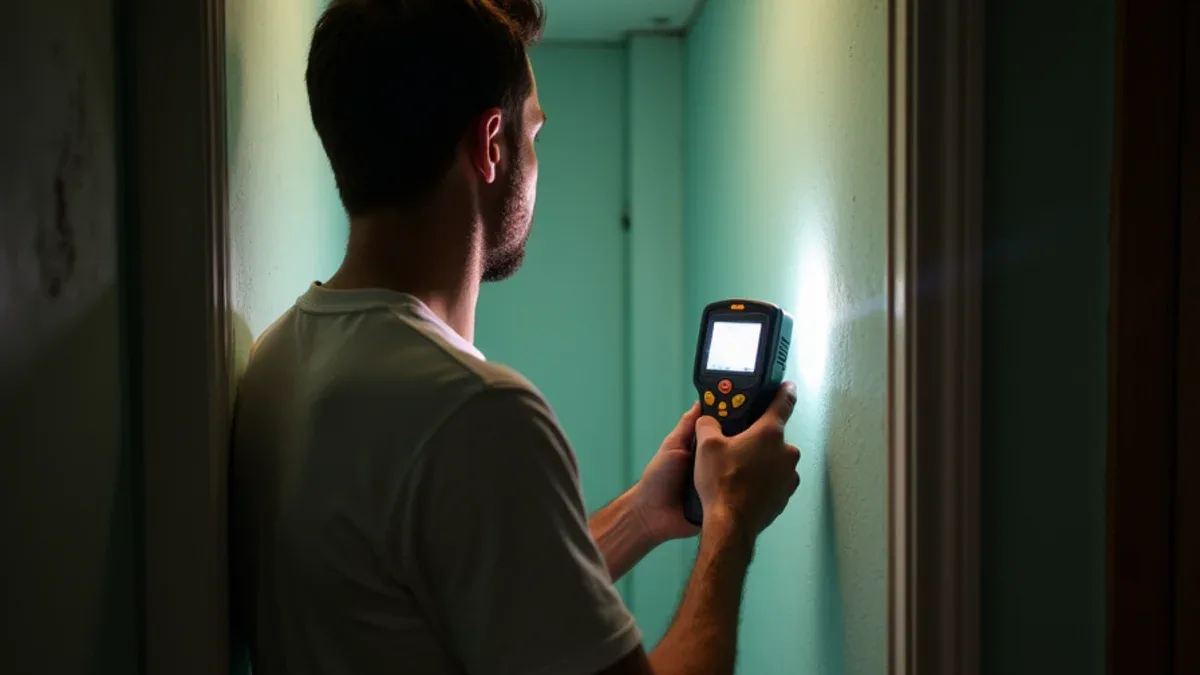
Locate the source with moisture meters and thermal imaging, open the assembly, remove any colonized porous material under containment, dry to a documented standard, treat the remaining structure, and only then address residual odor. See mold remediation and structural drying and dehumidification.
This is a very common call from the wooded hillside properties around Orinda Downs, where crawl spaces and wall cavities on sloped lots are where the water quietly ends up. Call +1 (201) 277-9344.
Frequently asked
What causes a musty smell after water damage?
Microbial volatile organic compounds — gases produced by mold and bacteria metabolizing a material that is still wet. Human noses detect them at very low concentrations, which is why you smell a problem long before you can see it. The smell is a symptom of an active source, not an odor problem, so it does not respond to air fresheners or ventilation.
Where should I look first for a musty smell with no visible source?
The crawl space. Air moves upward out of a crawl space into the living area, so a wet crawl space presents as an unexplained smell in a hallway or closet weeks before anything is visible. Open the hatch and look with a torch rather than going in. After that: inside wall cavities, under floating floors, in cabinet toe-kicks, behind appliances, and in HVAC ducting.
Will an ozone generator get rid of the smell?
Temporarily at best. Ozone and deodorizing fogs knock down airborne odor but do not remove growth from inside a material and do not dry anything, so the smell returns because the source is unchanged. They have a legitimate role as a finishing step after the source has been removed and the structure dried — never as a substitute for that.
The restoration company said the job was finished. Why does it smell?
Usually one of three things: no daily moisture readings were taken and equipment came out on a schedule rather than on measurement; a hidden assembly such as a wall cavity, cabinet void or the space under a floating floor was never assessed; or the water traveled further along bottom plates and joists than anyone checked. Ask for the drying log — if there is not one, that is your answer.