
The short answer
Clear the gutters, check that every discharge point carries water well away from the foundation, flush the catch basins and subsurface drain outlets, then walk the slope looking for new cracks or slumping. Half a day in October prevents most of what we get called out for in January.
We clean up the consequences of the same short list of undone maintenance every winter. None of it is difficult, none of it is expensive, and all of it has to happen before the first serious storm rather than during it.
Priority 1: clear everything that moves water
This is most of the value in the whole list, and it is free.
The clearing round — do this in October
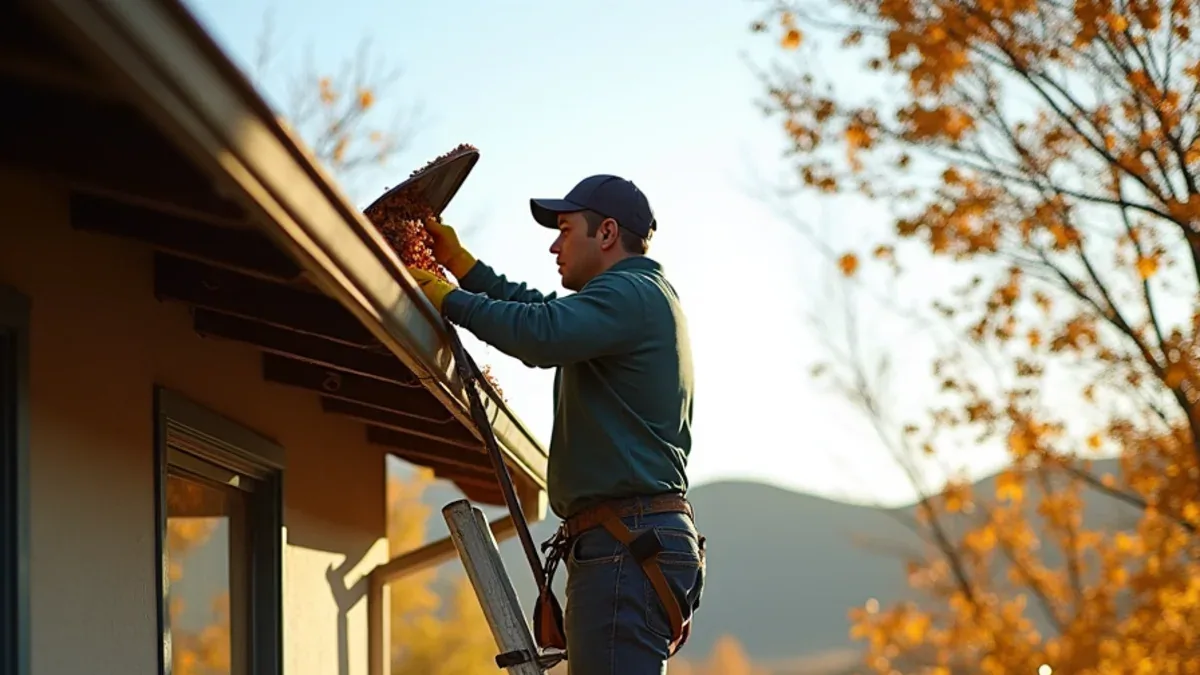
- Gutters, along their whole length, not just the accessible sections. Oak and pine litter mats together and holds standing water against the fascia.
- Roof valleys, where litter accumulates and backs water up under the shingle courses.
- Downspout outlets — check water actually comes out the bottom when you run a hose into the top.
- Area drain grates and catch basins. Lift the grates. Basins silt up level with the grate and nobody sees it.
- Crawl space vents. Leaf litter turns a vent into a low point that collects water.
- Culverts and roadside channels at your driveway.
- Retaining wall weep holes, which block with soil and debris.
Priority 2: test what you cleared
Clearing a grate does not mean the pipe below it works. Pour a bucket of water into every drain and confirm it goes somewhere. A drain that backs up with a bucket will do nothing at all with an atmospheric river.
Same for downspouts: run a hose into the top and watch the discharge point. Buried downspout lines crack and disconnect, and the water then discharges directly against your foundation instead of ten feet away.
Priority 3: get the water further from the building
- Extend downspout discharges six to ten feet from the foundation. Rigid extensions, not the folding plastic kind that get kicked aside.
- Check the grade in the strip immediately around the building — it should fall away. Landscaping renewal and settlement quietly reverse it.
- Look at hardscape. New paving, terracing or a raised bed can redirect surface water toward the house without anyone intending it.
- Clear the swale if you have one. Swales get planted over and flattened.
Priority 4: the roof
From the ground with binoculars, or from a ladder at the eave — not by walking a roof, particularly not a wet or steep one.
- Lifted, cracked, curling or missing shingles.
- Flashing at chimneys, skylights and wall intersections — the most common leak points by a distance.
- Plumbing vent boots, whose rubber collars crack after ten to fifteen years of UV.
- Debris accumulated in valleys and behind the chimney.
- Overhanging limbs, especially deadwood, over the roof. Get an arborist to assess anything substantial.
Priority 5: look underneath
Open the crawl space hatch and look with a torch. Do not go in.
You are checking for: standing water or damp soil, insulation hanging down from the joists, a torn or missing vapor barrier, condensation on ducting or plumbing, and anything stored down there that should not be. Any of those is a job to do before the rains, not after. See flooded basement and crawl space cleanup.
Priority 6: the indoor five minutes
- Find and test your main water shutoff. Turn it off and on to confirm it is not seized, then photograph it and send the photo to everyone in the household.
- Buy a meter key if you do not have one.
- Check static water pressure with a hose bib gauge. Over 80 psi means the regulator needs attention.
- Test the sump pump if you have one, and check that it has a battery backup. Storm power cuts and sump demand arrive together.
- Replace braided supply connectors that are more than five to ten years old.
- Insulate exposed pipe in the crawl space, garage and any exterior wall run.
The one thing worth doing during the first storm
Walk the property while it is raining hard. Coat, boots, torch if it is dark, ten minutes.
You will see which drains are taking water and which are ponding, whether the weep holes are running, where water pools against the building, and whether anything is arriving from a neighboring property, a road or a trail. That information cannot be obtained on a dry day and it is worth more than any inspection.
Photograph what you see. If the water is coming from somewhere that is not your land, that record matters. See hillside drainage 101 and the Orinda area page.
Frequently asked
When should I do winter storm prep in the East Bay?
October, before the first serious system. Doing it in December means competing for contractors with everyone else who left it late, working in the wet, and having already taken the risk through whatever storms arrived first. The clearing round in particular — gutters, valleys, area drains, crawl space vents — is free and represents most of the value in the whole list.
What is the single most important storm prep task?
Clearing everything that moves water, then testing it with a bucket. Oak and pine litter mats together and blocks gutters, valleys, area drain grates and crawl space vents more effectively than almost anything else, and nearly every winter intrusion we clean up has a blocked drain somewhere in its history. Clearing a grate is not enough — pour a bucket in and confirm the water goes somewhere.
Should I walk my roof to check it?
No. Check from the ground with binoculars or from a ladder at the eave. Composition shingle is genuinely slippery when wet or covered in oak litter, and most roof falls happen in exactly the conditions that make people want to get up there. If something needs closer inspection, a roofer with a harness is a small cost against the alternative.
What should I do during the first big storm?
Walk the property while it is raining hard — coat, boots, torch, ten minutes. You will see which drains are taking water and which are ponding, whether retaining wall weep holes are running, where water pools against the building, and whether water is arriving from a neighboring property, road or trail. That information is impossible to get on a dry day. Photograph what you see.