
The short answer
Turn the angle stop behind the toilet clockwise, or lift the tank lid and push the flapper closed if the valve is seized. Clean water from the tank is a mop-up. Anything that came up out of the bowl or a floor drain is Category 3 and needs professional cleanup.
Two separate problems get called the same thing. One is a nuisance you can handle with a plunger and a mop. The other is a Category 3 contamination event that you should not be in the room for. Telling them apart takes about a minute.
First: stop the water
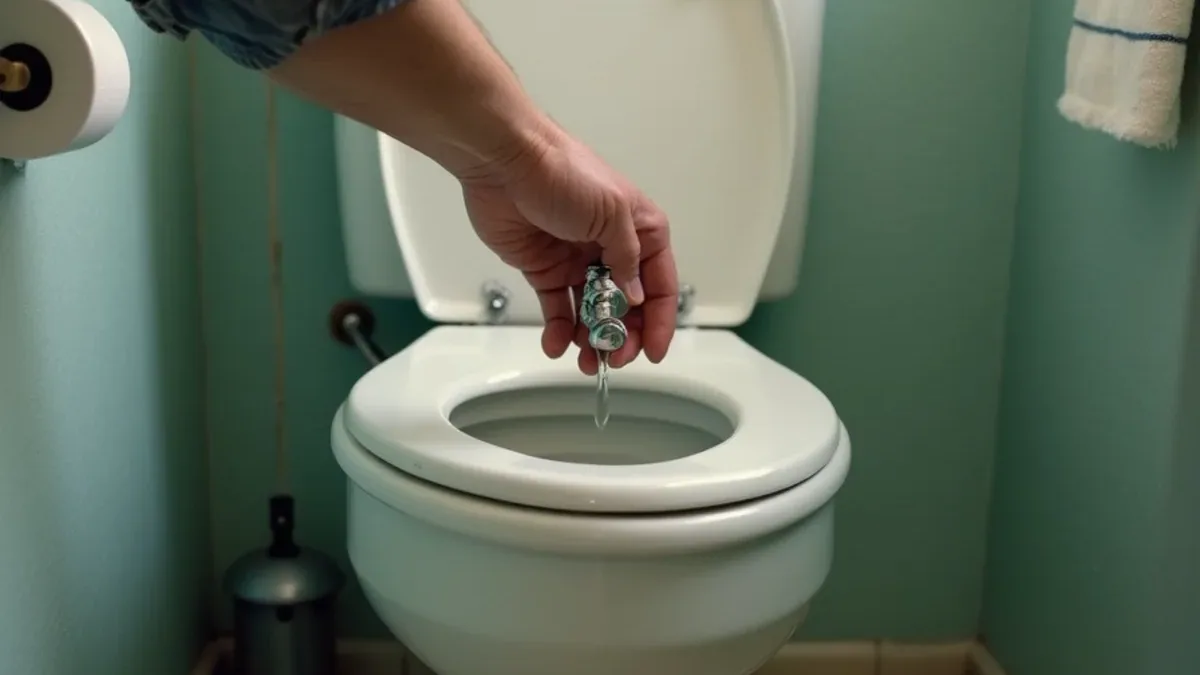
- Close the angle stop. The small oval or lever valve on the wall behind the toilet, at the bottom of the flexible supply line. Turn clockwise until it stops. This cuts the water to the toilet entirely.
- If the valve is seized, lift the cistern lid and push the flapper down by hand to seal the tank outlet, or lift the float arm to stop the fill valve. Either buys you time.
- Do not flush again. People flush a second time to "clear it." It adds another cistern of water to a bowl that cannot drain.
Second: work out what kind of overflow this is
This is the part that matters, and the diagnostic is simple: is this the only fixture affected?
| What you observe | What it means | How serious |
|---|---|---|
| Only this toilet is affected; other fixtures drain fine | A blockage in the toilet trap or the branch line | Nuisance — plunger, auger, or a plumber |
| Water is clean-ish, from the bowl and tank only | Category 1 or 2 depending on bowl contents | Manageable with care |
| Multiple drains slow at the same time | The main lateral, not the toilet | Serious — stop using all water |
| A toilet gurgles when the washer or shower drains | Air displaced past a blockage in the lateral | Warning sign before a full backup |
| Waste water coming UP out of a shower, tub or floor drain | The lateral is blocked and surfacing at the lowest fixture | Category 3 — do not clean it yourself |
| Sewage smell, or solids in the water | Category 3 contamination | Category 3 — get everyone out of the area |
If it is just this toilet
Plunge it properly — a flange plunger, sealed against the outlet, firm slow strokes rather than fast splashy ones. If that fails, a toilet auger is the next step, and after that it is a plumber.
For the water on the floor: if it came from the tank and the bowl and contained only urine, treat it as Category 2 — gloves, disposable cloths, clean and then disinfect hard surfaces, and get anything porous properly dried. If it reached carpet or crossed into another room, get a professional to check the subfloor, because water under a bathroom door tracks a long way along the flooring.
If multiple fixtures are involved, stop and read this
Several slow drains at once, or waste water coming up out of a shower or floor drain, means the problem is your sewer lateral — the pipe carrying everything from the house to the main. It is blocked, and the backup is surfacing at the lowest opening in the system.
That is Category 3 water. It carries E. coli, hepatitis A, giardia and other pathogens, and exposure happens through skin contact and inhaled aerosols as much as through anything obvious.
What to do with a lateral backup
- Stop using every fixture in the house. Every flush, every load of laundry, every dishwasher cycle adds volume to a system that cannot take it.
- Get children and pets out of the affected area and close the door.
- Turn off the HVAC if a return or supply register is in the affected space — it will distribute contaminated aerosols building-wide.
- Do not attempt to clean it. Household disinfectant on porous material sterilizes the surface and does nothing to the contamination inside.
- Photograph it from the doorway for your claim, then leave it.
- Call a plumber for the blockage and a restoration contractor for the contamination — +1 (201) 277-9344.
See sewage cleanup and backup removal for what proper Category 3 remediation involves — containment, negative air, full removal of affected porous material, and disinfection rather than deodorizing.
Why this happens in Lafayette
On the older housing stock through Downtown Lafayette and the wooded neighborhoods, the recurring cause is root intrusion. Mature oaks and bays send fine roots toward the moisture weeping from an older clay or cast-iron lateral joint, then thicken inside the pipe until they form a mat that catches solids.
That is why a lateral backup is rarely a one-off. Rootering clears the mat and the line drains again, but every entry point is still there. If you have had one, a camera inspection tells you the actual condition of the pipe — and it costs a small fraction of a second Category 3 cleanup.
The warning signs, before it happens
- Multiple fixtures draining slowly at the same time.
- A toilet that gurgles when the washing machine or the shower drains.
- A sewage smell at the exterior cleanout, particularly after rain.
- A soggy or unusually green patch of lawn over the line of the lateral.
- Backups that recur every year or two — the classic root intrusion signature.
Frequently asked
How do I stop a toilet overflowing right now?
Close the angle stop — the small oval or lever valve on the wall behind the toilet at the bottom of the supply line — by turning it clockwise. If it is seized, lift the cistern lid and push the flapper down by hand to seal the tank outlet, or lift the float arm to stop the fill valve. Do not flush again to try to clear it; that adds another cistern of water to a bowl that cannot drain.
When is a toilet overflow actually a sewage emergency?
When more than one fixture is affected. A single blocked toilet with everything else draining normally is a trap or branch-line blockage — a nuisance. Multiple slow drains at once, a toilet gurgling when the washer drains, or waste water coming up out of a shower, tub or floor drain means the main sewer lateral is blocked and the backup is surfacing at the lowest opening. That is Category 3 and you should not clean it yourself.
Can I clean up a small sewage overflow myself?
We would strongly advise against it even for a small area. Sewage carries E. coli, hepatitis A, giardia and other pathogens, exposure happens through skin contact and inhaled aerosols, and household disinfectant on porous material only sterilizes the surface while contamination remains inside the material. Without containment and negative air pressure you also spread aerosols into the rest of the house while you work.
Why does my toilet keep backing up every year or two?
That pattern is the signature of tree root intrusion into the sewer lateral. Fine roots enter through joints in older clay or cast-iron pipe and thicken into a mat that catches solids. Rootering clears the mat so the line drains again, but every entry point remains and the roots regrow. A camera inspection tells you the actual condition, and lining or replacement costs far less than repeated Category 3 cleanups.