

For a business, the water damage is rarely the expensive part. The expensive part is the days you cannot trade, the tenants you have to relocate, and the lease obligations that do not pause because a pipe let go above a suspended ceiling.
We plan commercial jobs around continuity: phased containment, after-hours and overnight work, and a scope written so a commercial adjuster can approve it without a fight. Call +1 (201) 277-9344.
Signs you need commercial water damage restoration
If you recognize two or more of these, the problem is already past the point where waiting is cheaper.
Ceiling tiles sagging, stained or dropping
Water above the grid. Often running for days before the first tile gives way.
Water at the base of a demising wall
It has come from the neighboring tenancy. Notify the landlord and the other tenant immediately.
A sprinkler head discharging
Shut the riser control valve. Tens of gallons a minute until someone does.
Damp carpet tile or lifting vinyl in one area
Slab moisture or a slow leak under the floor covering. Common in older commercial fit-outs.
A musty smell in an office with no visible source
Frequently the HVAC plenum or a condensate pan that has been overflowing.
Water in a warehouse from a roof drain or scupper
Flat-roof ponding. Structurally significant as well as a water problem.
Properties we work on in Lafayette
- Retail and restaurants along the Mt Diablo Boulevard corridor and the downtown plaza — where a closed door on a Saturday is the real loss.
- Professional and medical offices — where records, IT equipment and patient scheduling drive the urgency, and where privacy obligations affect how we handle contents.
- Multi-tenant buildings — where a single failure on an upper floor becomes three tenants' problem and a landlord/tenant responsibility question.
- Warehouses and light industrial — where inventory on pallets and slab moisture are the main concerns.
- HOA and condominium common areas — where the unit-owner versus association boundary determines who pays for what.
- Schools, churches and community buildings — where scheduling around occupancy is everything.
Keeping you open while we work
The default residential approach — set equipment everywhere and come back tomorrow — does not work in a commercial space. What we do instead:
Phase the work by zone
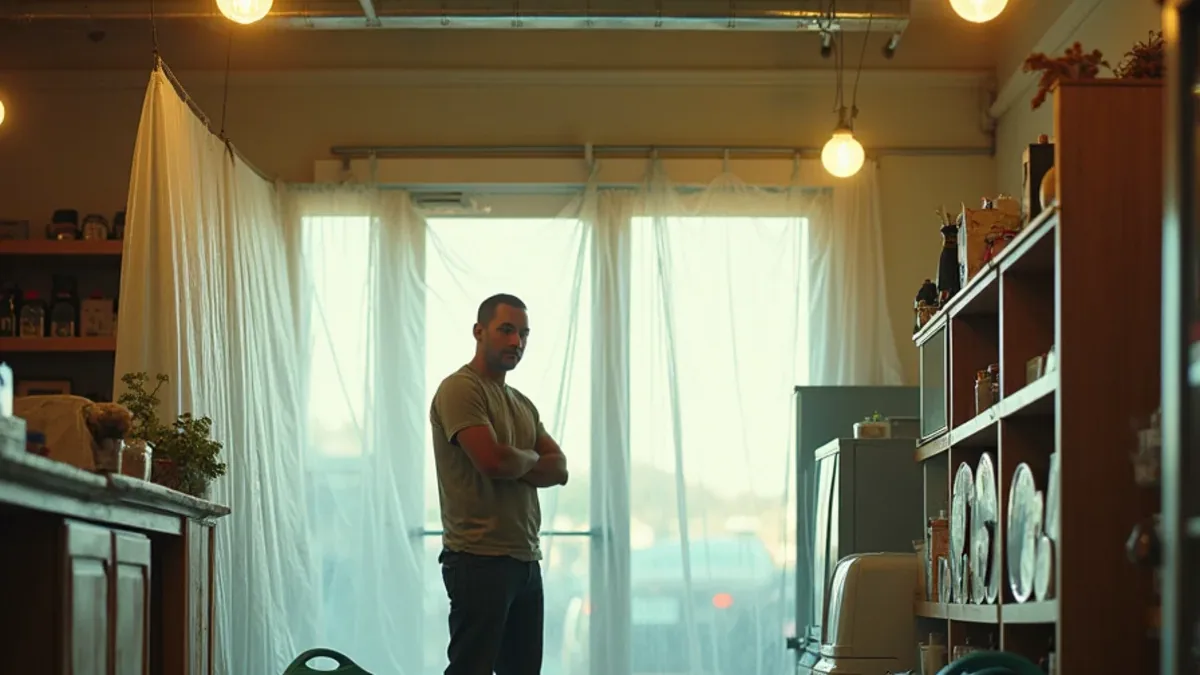
We contain and dry a section at a time so the rest of the floor keeps operating. Zippered poly walls, taped floor protection and a clean route in and out for our crew that does not cross your customer path.
Work when you are closed
Overnight and early-morning shifts are standard on retail and restaurant work. Equipment placement and monitoring visits scheduled around trading hours, not against them.
Manage noise, air and appearance
Equipment selection and placement matter when customers are present. Ducting routed out of sight, air scrubbers positioned to control odor rather than broadcast it, cables run and taped so nothing is a trip hazard.
Protect and relocate contents
Inventory, stock, records and equipment moved, elevated and documented. Where storage is needed we arrange it and log every item.
Give the operator a single point of contact
One project manager who knows your schedule, communicates before every visit, and does not send a different crew with different information each day.
Document to a commercial standard
Daily reports, moisture logs, photographs and a line-item scope suitable for a commercial carrier, a landlord, a property manager or a franchisor.
The failures we see most in commercial buildings
| Cause | Typical setting | What makes it worse |
|---|---|---|
| Pipe failure above a suspended ceiling | Multi-tenant office and retail | Runs unnoticed above the tiles until a whole grid collapses |
| Fire sprinkler head activation or failure | Any sprinklered building | Enormous volume very fast; the system keeps flowing until it is shut down |
| Rooftop HVAC condensate or unit failure | Single-story retail and office | Discharges into the ceiling plenum and spreads along ducting |
| Commercial kitchen equipment and drains | Restaurants | Grease-laden water is Category 3 and the health inspection clock starts |
| Water heater or boiler failure in a mechanical room | All types | Mechanical rooms are unattended and often have floor drains that are blocked |
| Roof drain or scupper blockage | Flat-roofed commercial buildings | Ponding water finds every seam; a flat roof holds enormous weight |
| Backflow or sewer surcharge | Ground-floor and basement level | Category 3 with immediate closure implications for food service |
Who pays: landlord, tenant, or the association
This question delays more commercial restoration than any technical problem. We are not attorneys and we do not adjudicate it, but understanding the usual structure helps everyone move faster.
- The structure and common systems — roof, exterior walls, main plumbing, common area — are usually the landlord's or the association's responsibility, insured under their policy.
- Tenant improvements and betterments — the fit-out, the flooring you installed, the partitions — are usually the tenant's responsibility under the tenant's policy.
- Contents, inventory and equipment are the tenant's.
- Business interruption is a tenant coverage and is often the largest single number in the whole event.
- A triple-net lease typically shifts more of the maintenance and insurance obligation to the tenant than a gross lease does. Read the specific clause rather than assuming.
Practically: we start the mitigation immediately and sort the billing split afterwards. Waiting a day for a responsibility determination while water sits is the most expensive decision available. We document the loss thoroughly enough that whoever ends up paying has what they need, and we can invoice separately by scope where the split is clear.
Category 3 and food service
Restaurants and food-handling businesses carry an extra layer. Any Category 3 event in a food preparation or storage area means Contra Costa Environmental Health involvement, a documented cleaning and sanitizing protocol, and usually a closure until clearance. Grease-laden waste water from a kitchen drain is Category 3 by definition regardless of how it looks.
We work these to the sanitizing standard from the first hour and document accordingly, because the reopening is gated on the paperwork as much as the work. See sewage cleanup and backup removal.
You do not need to know what to ask for
You do not have to know whether this is commercial water damage restoration, extraction, mitigation or a full restoration — those are stages of one job and sorting out which you need is our work, not yours.
A local person answers
Not a call center selling your emergency on to whoever bids for it.
First question
Has the water stopped? Everything about commercial water damage restoration changes depending on whether it is still arriving.
Then we move
60-minute dispatch, and we talk you through the shutoff while the crew is loading.
Free, no-obligation inspection with moisture readings and a written assessment. We bill your insurer directly.
Our commercial water damage restoration process
Six steps, documented at every stage, with the daily readings that prove it.
Rapid site assessment
Source, category, extent, and which zones can keep operating.
Phase and contain
Zoned containment so trading continues where it can.
Extract and protect contents
Water out, stock and records elevated, inventoried and documented.
Dry around your schedule
After-hours placement and monitoring, daily logged readings.
Report daily
One project manager, one daily report to owner, landlord, adjuster and property manager.
Reinstate and reopen
Repairs completed to a documented dry standard, with clearance where food service requires it.
What drives the price
We are not going to quote a number over the phone — nobody can scope a water loss without walking the property. These are the factors that decide it.
- Square footage and building height
- Commercial volumes need far more dehumidification capacity than an equivalent residential floor area.
- After-hours and phased working
- Overnight shifts and zoned working cost more per hour and save far more in downtime.
- Containment complexity
- Number of zones, decontamination routes and how much of the premises must stay operational.
- Contents and inventory handling
- Moving, storing, inventorying and returning stock, records and equipment.
- Category and clearance requirements
- Category 3 in a food-handling area brings sanitizing protocol, health department involvement and clearance testing.
- Specialty building systems
- Sprinkler impairment, elevator pits, IT rooms and commercial kitchen equipment all need specialist coordination.
Why choose Water Lafayette for commercial water damage restoration
Not the generic badges every restoration site carries — the things that actually change the outcome on this particular job.
Phased containment so you keep trading
Sealed zones with the unaffected floor area still open. On Mt Diablo Boulevard retail, a closed Saturday costs more than the water did, and we plan the job around that.
Overnight and pre-opening shifts as standard
Equipment placement and daily monitoring scheduled around your hours, not against them. Ducting routed off the customer path, cables taped, air scrubbers positioned to control odor rather than broadcast it.
One project manager who knows your schedule
Not a different crew with different information each morning. One person communicating before every visit, to you, the landlord, the property manager and the adjuster.
Documentation built for commercial carriers
Daily reports, moisture logs and a line-item scope that also supports a business interruption claim — frequently the largest number in the whole event and the most under-claimed.
Food service handled to the clearance standard
A Category 3 event in a prep area means Contra Costa Environmental Health and documented sanitizing. We work to that from hour one, because the reopening is gated on the paperwork.
Licensed and insured California contractor · IICRC-certified to the S500 water damage and S520 mold remediation standards · 60-minute dispatch across Lafayette and Lamorinda · Based at 3450 Golden Gate Way, Lafayette, CA 94549.
Commercial Water Damage Restoration FAQs
Can we stay open while you work?
Usually, at least partially. We phase commercial jobs by zone with sealed containment so the unaffected part of the premises keeps trading, and we do equipment placement and monitoring outside your hours where the loss allows. On retail and restaurant work, overnight and early-morning shifts are standard for us. We will tell you honestly at the assessment which zones have to close and for roughly how long.
Who is responsible — us or the landlord?
Broadly, the structure and common systems are usually the landlord's or association's responsibility and the tenant improvements, contents and business interruption are the tenant's, but the specific lease clause governs and a triple-net lease shifts more to the tenant. Practically, we start mitigation immediately and sort the billing split afterwards — waiting a day for a determination while water sits is the most expensive option available. We document thoroughly enough for whoever ends up paying, and we can invoice separately by scope.
How fast can you get a commercial crew here?
We target 60 minutes across Lafayette and Lamorinda from our Golden Gate Way base, and commercial calls get triaged high because the downtime cost compounds by the hour. For a large loss we scale the crew and equipment to the square footage rather than sending a residential setup, and we will tell you at the first call roughly what the drying footprint is going to look like.
A sprinkler head went off. What do we do first?
Shut the system down at the riser control valve — an activated head discharges tens of gallons a minute and will not stop on its own. Make sure whoever does it is authorized, then call the fire department so the system is properly returned to service, because in most jurisdictions an impaired sprinkler system triggers fire watch obligations. Then call us. Sprinkler water is clean but the volume is enormous and it travels through the whole ceiling plenum.
Our restaurant flooded from a kitchen drain. What happens with the health department?
Grease-laden waste water is Category 3 regardless of appearance, so we work it to the sanitizing standard from the first hour with containment, PPE and full removal of affected porous material. Contra Costa Environmental Health will typically be involved and the reopening is normally gated on documented cleaning and sanitizing, sometimes with clearance testing. We document to that standard as we go, because the paperwork is as much of the timeline as the work is.
Related reading
Water Damage in a Retail Space: A Response Plan for Mt Diablo Blvd and Downtown Lafayette Tenants
For a downtown business the water damage is rarely the expensive part. The days you cannot trade are. Here is the plan to have before you need it.
ReadProperty Manager's Guide to Tenant Water Damage: Who's Responsible for What in California
The technical work in a rental is identical. What is different is that three parties are involved, and the delay while they work out who pays is what costs the money.
Read