
The short answer
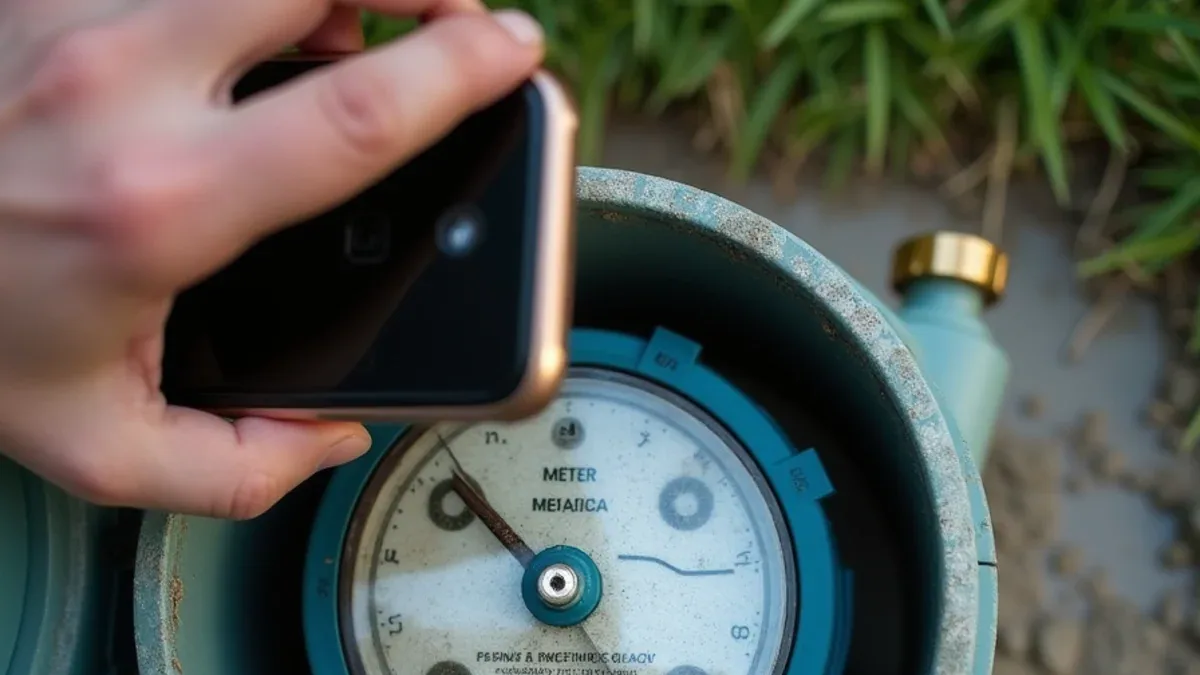
Shut off every fixture and appliance, then watch the meter’s leak indicator. If it keeps turning, water is leaving the system somewhere. Isolate the irrigation valve next — on a large lot a buried irrigation line is the most common cause, and it never shows up inside the house.
Most hidden leaks are found late, because the symptoms indoors are subtle and easy to explain away. The bill is the exception. It is objective, it is third-party data, and it moves before anything else does.
Read the pattern, not the number
The shape of the change tells you what kind of problem you have.
| Pattern | Likely cause |
|---|---|
| A sharp step up, then steady at the new level | A continuously running leak. Started at a specific point |
| A gradual climb over several billing periods | A worsening leak, or creeping irrigation demand |
| A single high period, then back to normal | A one-off — a running toilet, a hose left on, an irrigation controller fault |
| Higher every summer, normal in winter | Irrigation demand, not necessarily a leak |
| Higher every winter | Unusual — worth investigating; possibly a below-grade leak sensitive to groundwater |
Compare against the same period last year, not against last month. Seasonal variation in irrigation alone will otherwise mislead you.
The fifteen-minute isolation procedure
Free, and it will tell you not just whether you have a leak but roughly where.
- Turn everything off. Every tap, the dishwasher, the washing machine, the ice maker, and the irrigation controller. Everything.
- Go to the meter at the property line. Note the exact reading, and look for the small triangular or star-shaped leak indicator — it turns whenever any water is flowing.
- Wait thirty minutes. Do not use any water.
- Check again. Movement means water is escaping somewhere between the meter and the house. A spinning leak indicator means a significant flow.
- Isolate irrigation. Close the irrigation valve and repeat. If the movement stops, the leak is in the irrigation system and the search is outdoors.
- Isolate the hot side. Close the cold inlet valve on top of the water heater and repeat. If the movement stops, you have a hot-water leak — by far the more common slab leak, and it narrows the search enormously.
- Photograph each meter reading with the time. That record is genuinely useful later.
On a big Lafayette lot, suspect irrigation first
On the larger landscaped properties through Reliez Valley, Happy Valley and out into Alamo, irrigation is the most common source of a substantial unexplained increase.
Underground irrigation mains and laterals leak for months with nothing visible above ground except a patch of lawn that is greener, softer and growing faster than everything around it. On a large system the volume adds up very quickly.
Worth checking beyond the meter test: a stuck valve that never fully closes, a cracked riser hidden in planting, a controller programmed to run more than anyone realizes, and a leak on the main between the meter and the backflow preventer.
The indoor suspects
- A running toilet. Check with the food coloring test.
- A hot-water slab leak. Warm patch on the floor, running water audible at night. See slab leak water damage restoration.
- A pinhole in a wall. Bubbling paint, a damp patch that comes and goes, a musty smell.
- A weeping water heater — check the base of the tank and the T&P discharge pipe.
- A dripping outdoor hose bib or a hose left connected with a nozzle holding pressure.
- A leaking pressure regulator or backflow device.
Why the bill history is worth keeping
This is the part most people miss, and it has real financial value.
The most contested question in any hidden-leak insurance claim is how long it had been running. A carrier looking at extensive damage from a small pinhole will reasonably ask, because the answer determines whether the loss was sudden or gradual — and gradual is generally excluded.
A clean step change in your consumption between one billing period and the next effectively date-stamps when the leak started, and it is objective third-party data rather than anyone's recollection. Pull twelve months of statements before the adjuster conversation. See does homeowners insurance cover water damage in California.
When to call
If the meter test confirms a leak and the isolation steps have not identified it, that is the point for professional detection — acoustic, thermal, moisture mapping and tracer gas, used in the right order for the kind of leak you have. See leak detection services or call +1 (201) 277-9344.
The alternative is exploratory demolition, and we have attended houses where several openings had already been cut in the wrong places.
Frequently asked
My water bill doubled. Where do I start?
The meter test. Turn off every water-using fixture and appliance including the ice maker and irrigation controller, note the meter reading or watch the small leak-indicator dial, wait thirty minutes, then check again. Any movement means water is escaping. Then isolate — close the irrigation valve and repeat, then close the water heater cold inlet and repeat — to narrow it to a system.
How much can a hidden leak add to an EBMUD bill?
A continuously running leak can add hundreds of dollars a year, and considerably more on a larger property with an underground irrigation leak, where the volume is unconstrained. But the bill is the smaller cost — a leak soaking framing and insulation for months turns a plumbing repair into a mold remediation, and that is where the real money goes.
Why is irrigation the first suspect on a large lot?
Because underground irrigation mains and laterals leak for months with nothing visible above ground except a patch of lawn that is greener and softer than the rest, and on a large system the volume adds up quickly. Close the irrigation valve specifically and repeat the meter test — if the movement stops, you have isolated it and the search is outdoors rather than in your walls.
Why should I keep my water bill history?
Because it is the strongest evidence available for when a hidden leak started, and that is the most contested question in any hidden-leak insurance claim. A clean step change in consumption between one billing period and the next effectively date-stamps the start, and it is objective third-party data rather than recollection — frequently the difference between a sudden-event determination and a gradual-seepage exclusion.